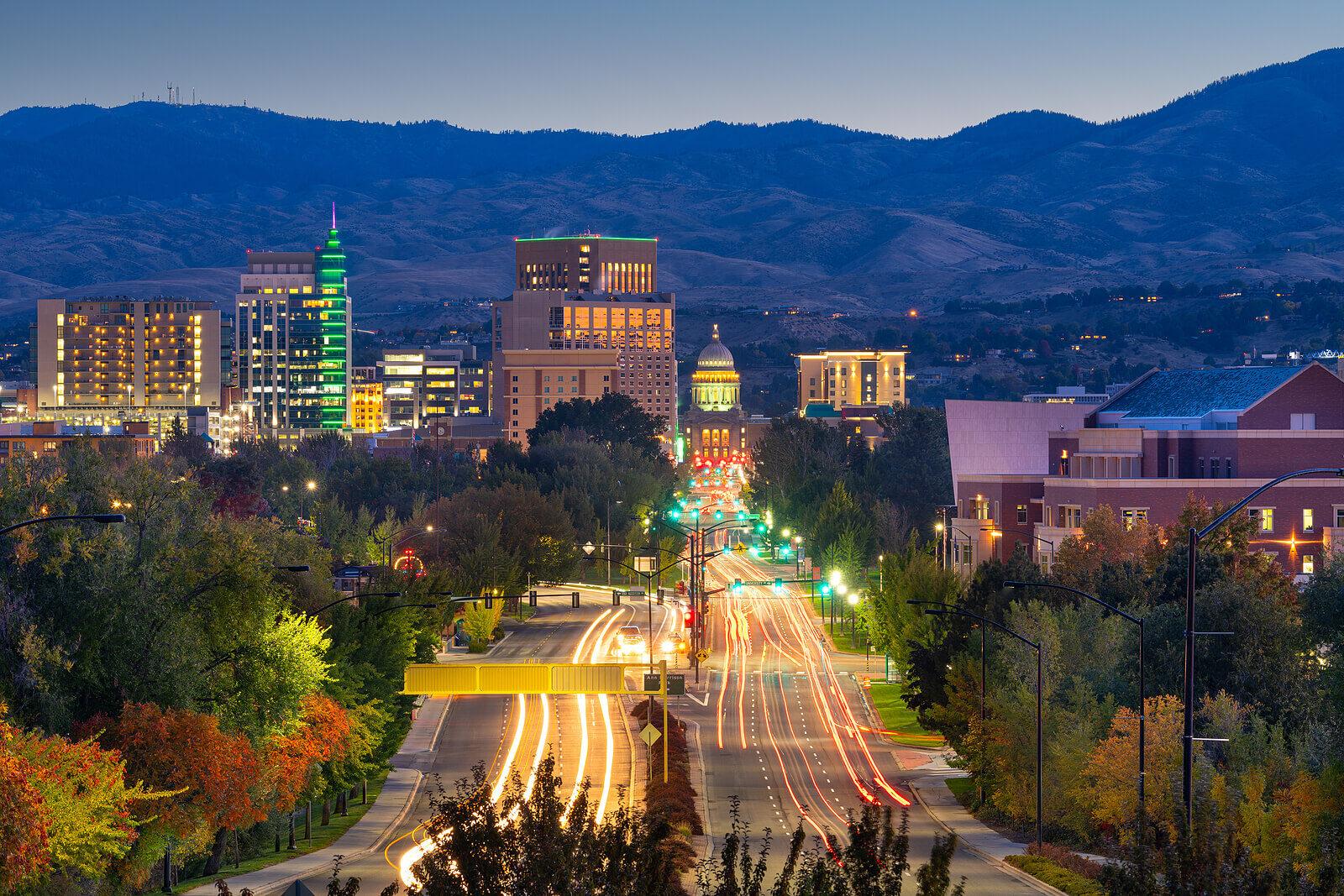
Idaho statewide
Idaho's high desert and mountain valleys put commercial roofs through a brutal annual cycle: heavy winter snow load across the Panhandle and Wood River Valley, intense summer UV at elevation, and the daily freeze-thaw swings that pry open seams and flashings. Boise's fast-growing warehouse, distribution, and tech-campus footprint along the Treasure Valley means a large stock of newer single-ply membranes now reaching the age where ponding and parapet detailing start to matter. We advise building owners, REITs, and asset managers across Idaho on reading those conditions early: separating roofs that need targeted repair from those approaching genuine replacement, and timing capital so a Boise or Coeur d'Alene portfolio isn't caught chasing leaks every spring thaw.
The Idaho commercial markets we cover
The Boise metropolitan area, the Treasure Valley running through Meridian, Nampa, and Caldwell, holds the largest concentration of commercial building stock in the state and has been among the fastest-growing regions in the country. That growth has produced a substantial inventory of newer low-slope roofs on distribution, manufacturing, office, and retail buildings, including the large facilities tied to the region's semiconductor and technology employers. These are roofs where disciplined early management protects a recent and significant investment.
Outside the Treasure Valley, the building stock and the climate change together. Idaho Falls and Pocatello anchor eastern Idaho's agricultural, food-processing, and institutional property; Twin Falls serves the Magic Valley's heavy dairy and food economy; Lewiston carries timber and industrial facilities; the central mountain resort areas around Sun Valley add hospitality and commercial property in a severe-snow environment; and Coeur d'Alene and the Panhandle blend resort, retail, and industrial roofs in the wettest, most snow-prone part of the state. We treat each of these as a distinct risk environment rather than applying one statewide assumption.
The kinds of buildings an owner holds in Idaho also concentrate exposure in specific ways. Agriculture and food processing run through the southern and eastern parts of the state, and those facilities often carry large, equipment-laden roofs over refrigerated and process spaces where a leak threatens product, not just finishes. The Treasure Valley's technology and distribution growth adds wide low-slope roofs on high-value contents. In both cases the building's use raises the cost of a roof failure well above the price of the repair itself, which is precisely why owners benefit from getting ahead of condition rather than reacting to it.
What actually drives roof failure here
Idaho's roofs are shaped by cold, snow, and a sharp seasonal swing, with the southern desert adding heat and aridity on top. The failure drivers we plan around are these:
- Snow load, which in the mountain and northern regions can be severe and sustained, placing real structural demand on roofs and, where drifting occurs against parapets and equipment, concentrating weight in ways the original design may not have anticipated.
- Freeze-thaw cycling, the repeated daily transition across freezing that drives water into seams, flashings, and membrane defects and then expands it, progressively widening every small opening through a long winter.
- Ice damming and meltwater intrusion, where snow melts, refreezes at colder roof edges and drainage points, and backs water up under and behind the membrane, a classic cold-climate failure mode that punishes poor detailing and inadequate drainage.
- Wide temperature extremes between hot, dry summers and hard winters, which expand and contract roof assemblies and fatigue membranes, fasteners, and sealants over time.
- High ultraviolet exposure and aridity in the southern desert and at elevation, which age membranes and coatings and dry out sealants faster than a milder climate would.
- Wind across the open terrain of the Snake River Plain and the mountain valleys, which stresses edge and perimeter attachment and, combined with drifting snow, loads roofs unevenly.
The throughline is water managing to enter the assembly and then freezing. A defect that would weep harmlessly in a warm climate becomes a wedge in Idaho, and drainage that performs adequately in summer can be defeated by ice in January. Catching those weaknesses before winter, rather than discovering them through an interior leak in February, is the difference between a maintenance line item and an emergency.
Owner-side condition reporting
For an owner or asset manager, the foundation is a standardized condition report on every roof, written identically across the Treasure Valley, the mountain towns, and the Panhandle so the whole portfolio is comparable. We document membrane and assembly type, attachment and seam condition, flashing and penetration detailing, drainage performance under snowmelt conditions, evidence of trapped moisture or prior ice intrusion, and a realistic remaining service life. Everything is photographed and located so each year's report sits directly against the last and deterioration becomes visible rather than guessed at.
Because we represent the owner, the report does not exist to sell a replacement. A roof with serviceable life left should be maintained and watched, and that judgment matters across a multi-building Idaho portfolio where roofs of different ages and in different climates compete for the same capital. We tell you which roofs need work before the next winter, which can be carried, and which simply need to be kept clear and monitored.
Timing the inspection cycle to Idaho's seasons is part of the value. A roof walked in the fall reveals what must be addressed before snow arrives, while a spring inspection after the melt shows what the winter actually did, including ice intrusion and load damage that were invisible while the roof was buried. Owners who inspect on that rhythm catch cold-climate damage at the two moments it is most legible.
Capital planning and warranty exposure
Idaho's seasons compress the window for major roof work. Tear-offs and large repairs are realistically a warm-season activity across much of the state, which makes planning ahead essential: a roof identified as failing in midwinter cannot simply be replaced on demand, and an owner caught unprepared spends the cold months managing leaks. We build multi-year capital forecasts that put every roof on a funded timeline and that schedule major work into the seasons when it can actually be performed well, so replacements are deliberate rather than forced.
Warranty exposure is a recurring source of avoidable loss. Manufacturer warranties carry conditions that Idaho's climate routinely puts at risk:
- Snow load and ice damage that must be documented and filed within the required window after a severe-weather event.
- Drainage and ponding conditions, often worsened by ice, that can exceed warranty limits and disqualify a claim.
- Unauthorized rooftop work and tenant-added equipment or penetrations that void coverage on the affected areas.
- Maintenance records the manufacturer requires as a precondition to honoring the warranty, which are easy to neglect on roofs that are buried in snow for months.
We track warranty terms, expirations, and compliance obligations across the portfolio and flag the actions that keep coverage intact, so a significant roofing asset is not silently unprotected heading into the season most likely to damage it.
Managing roofs across an Idaho portfolio
Owners with Idaho property often hold a spread of buildings, some in the mild Treasure Valley and others in the harsh mountain or northern climates, acquired at different times and roofed to different standards. Managing that coherently requires one set of standards applied everywhere, one record per roof, and one schedule of inspections, maintenance, and planned capital that accounts for each building's actual climate.
We provide that layer. We inspect before and after the winter season and after major storm events, we scope and competitively bid the work that genuinely needs doing, and we hold contractors to the documented condition rather than to their own estimate. For owners and asset managers carrying commercial property anywhere in Idaho, the result is roofs that are understood, budgeted, and protected through every winter, with decisions made by the people who own the risk rather than by whoever last walked the roof.