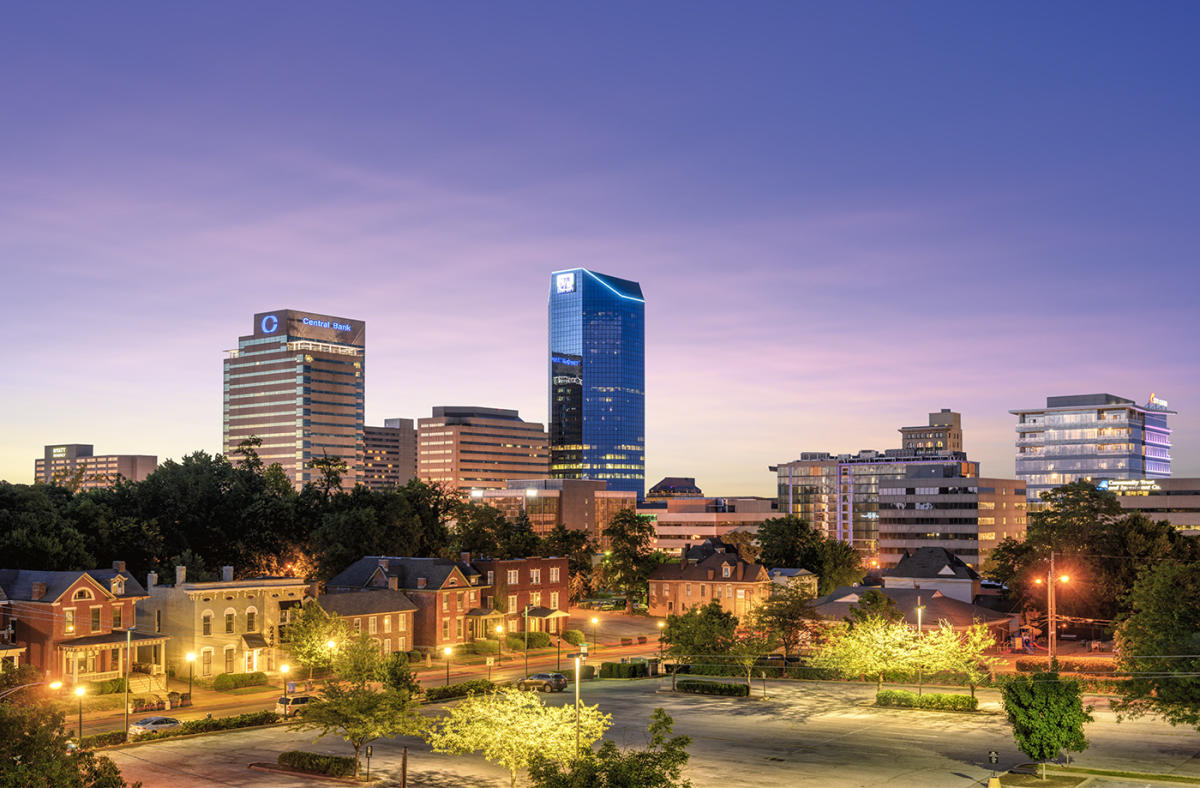
Kentucky statewide
Kentucky's commercial roofs sit under a humid, freeze-thaw climate and on top of one of the densest logistics footprints in the country, and both facts matter to an owner deciding when and how to spend. We work for building owners, REITs, and asset managers on the assets they hold, not for the crews who install them. That means our work is condition reporting, capital planning, warranty management, and storm-loss strategy across a Kentucky portfolio that might run from a UPS-adjacent distribution building in Louisville to a manufacturing plant outside Lexington to a retail strip in the Northern Kentucky suburbs. The owner-side position is the point: it lets us advise on what the roof needs and when, without a stake in selling the next installation.
The commercial markets we cover across Kentucky
Louisville anchors the state's commercial real estate. As Kentucky's largest city it carries a diversified economy built on logistics, manufacturing, and healthcare, and it is home to UPS Worldport, the company's global air hub and one of the busiest air-cargo operations in the world. The gravitational pull of Worldport, combined with Kentucky's position at the crossroads of I-64, I-65, and I-75, has filled the metro with very large distribution and fulfillment buildings whose single-ply membrane roofs cover acres at a time. Those big, flat fields are the assets where a missed roof problem becomes the most expensive, because the replacement cost and the value of what sits underneath are both enormous.
Lexington is the second major market, with a highly educated workforce and growing biotech, healthcare, and advanced-manufacturing sectors layered over its traditional role as a center of the horse industry. Nearby Georgetown is home to one of Toyota's largest assembly operations in North America, and the automotive supply chain it supports populates central Kentucky with parts plants and supplier warehouses. Northern Kentucky, across the river from Cincinnati, adds another heavy concentration of distribution, light industrial, and office product. Statewide, the commercial vacancy picture in warehousing has been tight, which raises the stakes on every roof: owners cannot easily relocate a tenant out of a building while a roof is failing, so the roof has to be managed in place. The dominant building types we assess reflect this economy:
- Large distribution and fulfillment centers clustered around Louisville and the interstate crossroads
- Automotive assembly and supplier plants concentrated in central Kentucky near Georgetown and Lexington
- Bourbon distillery, warehousing, and aging facilities across the central and northern regions
- Healthcare, institutional, and university buildings in Louisville and Lexington
- Retail, office, and light-industrial product in Northern Kentucky and the metro suburbs
The weather that drives roof failure here
Kentucky's climate is humid and continental, and the roof risk it creates is less about a single dramatic event and more about relentless cycling. Winters bring repeated passes across the freezing point, and that freeze-thaw action is one of the most destructive forces on a low-slope roof: water finds its way into seams, laps, fasteners, and parapet details, then freezes and expands, working those openings wider with every cold snap. Add the state's heavy rainfall and high humidity, and standing water on poorly drained roofs becomes a persistent problem that accelerates membrane breakdown and shows up as interior leaks long after the underlying damage began.
Kentucky also sits in a corridor that sees genuine severe weather. The western and central parts of the state are exposed to spring and early-summer thunderstorm seasons that bring hail and damaging straight-line winds, and the state has experienced destructive tornado outbreaks, including catastrophic events in western Kentucky in recent years. For an owner, the practical drivers to plan around are clear:
- Freeze-thaw cycling that opens seams, fasteners, and flashing details through winter
- Heavy rainfall and humidity that produce ponding and persistent moisture on flat roofs
- Hail and damaging winds during the spring and summer storm season
- Tornado-grade events that can cause sudden, total roof loss on individual buildings
- Summer heat and UV loading that degrades membranes between the wetter seasons
What owner-side advisory looks like in practice
For an owner or asset manager, the deliverable is a current, comparable picture of every roof and a capital plan that survives scrutiny from investors and lenders. We document membrane type, age, attachment, drainage, and existing damage on each asset, then turn that into a multi-year forecast that separates the roofs that need replacement from the ones that can be extended with targeted repair, and from the ones where deferring spend simply moves the cost into tenant-improvement and inventory losses the next time water gets in.
In a logistics-heavy state, drainage and warranty deserve particular attention. The same flat, oversized roofs that make Kentucky distribution buildings efficient are the ones most prone to ponding, and ponding is both a direct cause of failure and a common trigger for warranty disputes. Manufacturer membrane warranties carry conditions on maintenance, drainage, attachment, and modification that owners breach more often than they realize, and a warranty that reads like protection can be void by the time a claim is filed. We track those obligations across the portfolio and document post-storm damage on the owner's behalf, so that both warranty coverage and any insurance claim hold together when they are actually tested.
Managing a Kentucky portfolio across building types
A statewide Kentucky portfolio mixes building types that age and fail differently, and a single reporting standard across all of them is what makes capital allocation rational. The advisory questions we work through with owners and asset managers include:
- How acre-scale distribution roofs near Louisville concentrate both replacement cost and contents value, making drainage and early detection decisive
- How automotive and manufacturing plants in central Kentucky carry large, older membrane fields whose replacement must be sequenced years in advance around production
- How distillery and warehousing buildings combine roof condition with strict environmental and inventory-protection requirements
- How retail and office product in Northern Kentucky and the metros ties roof condition directly to tenant retention in a tight market
- How scattered holdings need comparable condition data so that spend goes to the roofs with the highest risk, not the ones that leaked most recently
Timing capital in a tight logistics market
Kentucky's industrial vacancy has run low for years, and that scarcity changes the economics of a roof decision. When a distribution or manufacturing building is fully leased and hard to backfill, an owner cannot simply empty it to chase a leak, and a tenant operating around-the-clock fulfillment will not tolerate water over its racks or conveyors. The roof has to be managed while the building stays in service, which puts a premium on planning replacements and major repairs during the windows that disrupt operations least rather than reacting after a failure forces the issue at the worst possible time.
That same dynamic shapes how we sequence capital across a portfolio. A roof nearing the end of its life on a high-rent, fully occupied building usually warrants attention ahead of a comparable roof on a less critical asset, because the cost of a failure there is measured in tenant relationships and lease renewals, not just repair invoices. We help owners weigh those trade-offs with comparable condition data, so the capital plan reflects where a roof failure would actually hurt most. The common thread in Kentucky is that the climate punishes water that is allowed to sit and seams that are allowed to open. None of that announces itself until a tenant reports a leak over stored product or a production line, by which point the cheap fix is long past. Our role is to keep owners ahead of it with reporting they can act on, capital plans they can defend, and warranty and claim positioning that does not collapse the moment a storm or an inspector tests it.