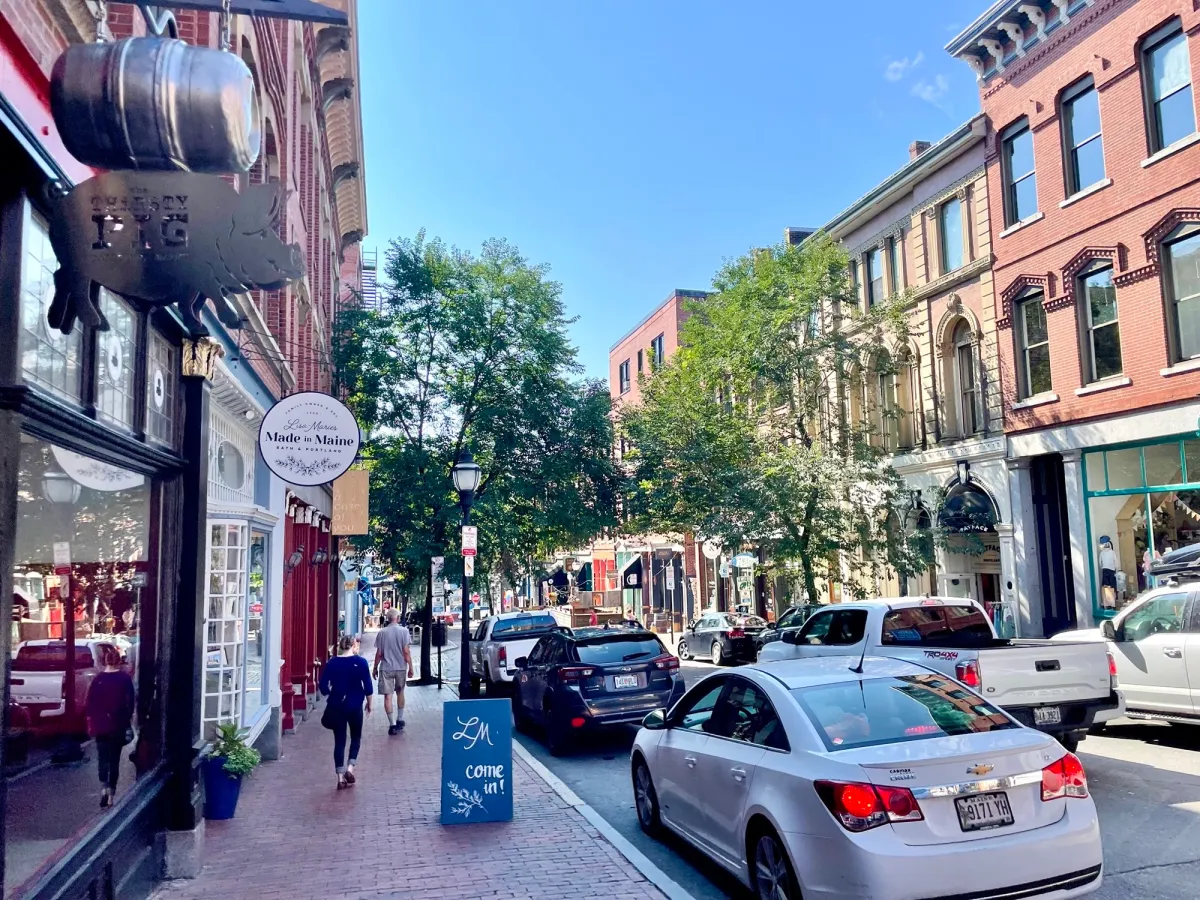
Maine statewide
Maine subjects commercial roofs to one of the longest, harshest snow-load seasons in the Lower 48, where deep drifts, ice damming, and relentless freeze-thaw cycling work apart seams and flashings across Portland, Lewiston, and Bangor. Much of the state's building stock is older brick mill, retail, and institutional property, often carrying low-slope membranes that were never designed for today's accumulation and meltwater patterns. Coastal humidity and salt air along the harbor districts add corrosion risk to fasteners and edge metal. For owners here, deferred maintenance rarely stays small; a missed inspection becomes a structural concern after one heavy winter. We help owners read those signals early, plan capital around the freeze cycle, and avoid emergency spend when the thaw exposes what the snow was hiding.
The markets we cover
Maine's commercial building stock is concentrated but varied, and a portfolio here is rarely clustered. Greater Portland anchors the state economy with healthcare campuses led by Maine Medical Center, the finance and technology presence keyed to employers like WEX, hospitality and seafood cold-storage along the working waterfront, and the retail mass of South Portland and the Maine Mall. Inland, Lewiston-Auburn carries a deep inventory of nineteenth-century textile mills and brick manufacturing buildings now repurposed for healthcare, finance, and light industry, where the original low-slope and built-up roofs have often been recovered more than once.
Bangor functions as the commercial hub for northern and eastern Maine, with Northern Light Eastern Maine Medical Center, regional retail, and distribution serving a vast rural catchment. Because buildings sit along the I-95 spine and the coastal routes, often hours apart, a centralized and documented record of each roof's condition is far more useful to an owner than a drawer of disconnected invoices. The roofs we plan for tend to fall into recognizable categories tied to the state economy:
- Paper, pulp, and wood-products plants with large low-slope spans across central and northern Maine.
- Aquaculture, seafood processing, and cold-storage facilities along the coast from Portland to Down East.
- Boatbuilding, defense, and composites manufacturing in the Midcoast and the Kittery and Sanford corridors.
- Hospital systems, university buildings, and municipal stock that institutions hold for the long term.
- Distribution centers and big-box retail clustered around I-95 and the Portland and Bangor interchanges.
What Maine weather does to a roof
Maine is, for roofing purposes, a snow-load and freeze-thaw state first and everything else second. Annual snowfall runs from roughly 50 inches on the southern coast to well over 100 inches inland and in the mountains, and that load sits on low-slope commercial roofs for months at a time. Wet, dense snow concentrates against parapets, mechanical curbs, and roof-mounted equipment far beyond the field average, and when internal drains, scuppers, and downspouts freeze shut, meltwater ponds and adds still more weight. Structural capacity, drainage design, and an actual plan for snow removal are not maintenance afterthoughts in Maine; they are the central risk an owner carries through every winter.
The second driver is the freeze-thaw cycle. Maine winters swing repeatedly between hard cold and brief thaw, and each cycle works water into seams, laps, and flashing details, then expands it as it refreezes and pries them open. On heated, occupied buildings that lose warmth through the roof deck, that meltwater runs to the colder eaves and low edges and refreezes into ice dams, backing water up under the membrane or beneath shingles until it finds the interior. Layered on top are coastal nor'easters that drive wind and wind-blown rain off the Gulf of Maine, salt exposure that corrodes flashings and fasteners on waterfront buildings, and intense summer UV on dark membranes. A Maine roof ages through several distinct stresses in a single year, and each one finds a different weakness.
How we advise owners
Our role is to give owners and asset managers an accurate, current picture of every roof they hold and a defensible plan for what to spend and when. That begins with condition reporting: a documented assessment of each roof's membrane or system, its flashings, drainage, parapets, equipment penetrations, insulation moisture, and remaining service life, captured so it can be compared year over year and read by someone who never sets foot on the building. That record is what turns reactive repair spending into a forecast an owner can budget against.
From the assessment we build and maintain the plan that ownership actually uses:
- Roof-by-roof condition scoring and photographic documentation across an entire portfolio.
- Remaining-service-life estimates that feed multi-year capital and reserve forecasting.
- Repair-versus-replace analysis, so capital is timed before a winter failure rather than after one.
- Snow-load and drainage review for low-slope roofs carrying heavy seasonal accumulation.
- Infrared and moisture surveys to find saturated insulation before it spreads and forces early replacement.
- Pre-purchase and pre-lease roof due diligence for acquisitions, dispositions, and renewals.
Warranty and contractor oversight
A great deal of avoidable cost in Maine comes from warranties that lapse on a technicality and from repairs that quietly void coverage. Many membrane and system warranties carry conditions on drainage, on who is allowed to perform work, and on documented periodic inspection, and a roof that goes several winters without a recorded assessment is a roof whose manufacturer has grounds to decline a claim. We track warranty terms and expiration dates across the portfolio, flag the specific conditions that govern a claim, and make sure repair work is performed in a way that preserves coverage rather than forfeiting it.
When work goes out for bid, we keep the owner on the informed side of the table. We help define scope and specifications, evaluate contractor proposals on a like-for-like basis rather than on headline price, and review completed work against what was specified and what the warranty requires. Maine's contractor pool is finite and the winter work window is short, which makes a clear scope and an honest comparison especially valuable. Because we never hold the contract or self-perform, that review carries no conflict of interest; our only stake is the durability of the owner's asset and the integrity of its coverage.
Managing snow and the winter season
In most of the country, roof management is a steady year-round rhythm. In Maine it is driven by a single, dominant season. The buildings most at risk are the wide low-slope roofs on industrial, distribution, and institutional stock, where drifting and snow that slides off higher adjacent sections can load one area well past design. Owners who wait for a leak or a sagging deck to tell them there is a problem are already too late, and emergency snow removal in February is both expensive and crowded.
We help owners get ahead of it: identifying which roofs in a portfolio are most exposed to drift and overload, confirming that drains and scuppers are clear before the first storm, and setting thresholds for when monitored snow removal is warranted rather than guessing after a heavy fall. Documenting condition every autumn also gives ownership a clean baseline, so that if a winter event does cause damage, the before-and-after record supports an insurance claim instead of an argument over pre-existing wear.
Managing a Maine portfolio over time
For an owner or asset manager holding multiple buildings across Maine, the value is in seeing the whole portfolio at once and spending ahead of failure rather than in reaction to it. We maintain a living record of every roof, sequence capital so the worst risks are addressed before the snow arrives, and give ownership the documentation it needs for budgeting, lender reporting, and disposition. Whether the holding is a single Portland medical building or a spread of industrial and retail roofs from York County to Penobscot County, our work is to keep ownership informed, the warranties intact, and the capital plan honest.