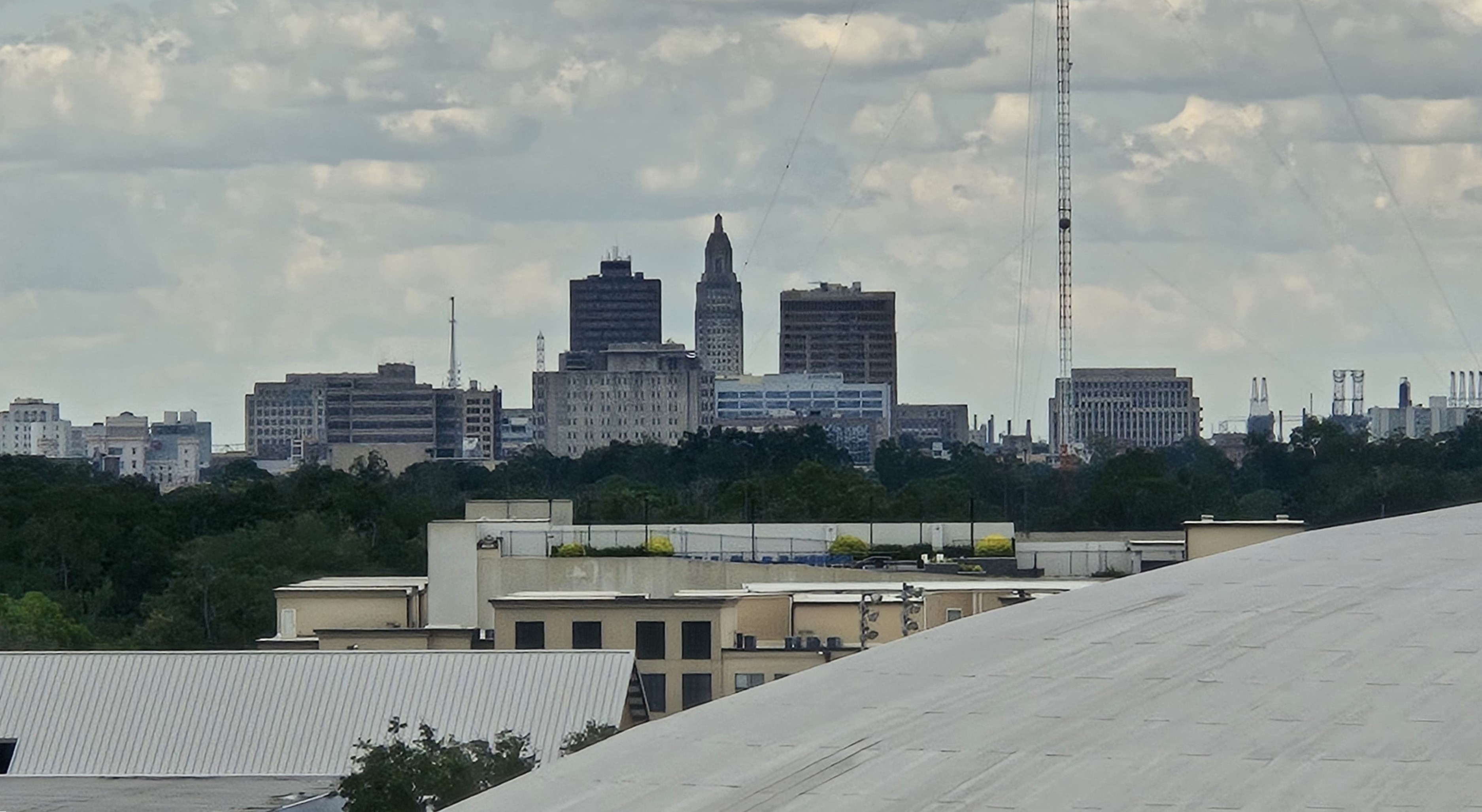
Louisiana statewide
Louisiana is one of the most demanding roofing environments in the United States, and for a building owner that is not a marketing line but a budgeting reality. Gulf hurricanes, near-constant heat and humidity, heavy rainfall, and coastal salt all attack commercial roofs here, and the insurance market has tightened around exactly that exposure. We advise building owners, REITs, and asset managers on the roofs they own rather than the crews who install them, which means our work is condition reporting, capital planning, warranty management, and storm-loss strategy across a Louisiana portfolio that might span a New Orleans office tower, a Baton Rouge petrochemical facility, and a string of retail and distribution buildings along the river corridor. That owner-side position is the point: we tell you what the roof needs and when, with no stake in selling the next installation.
The commercial markets we cover across Louisiana
New Orleans is the state's largest city and one of the most important port and tourism economies in the country. Its commercial building stock concentrates in hospitality, healthcare, education, and the port-related industrial activity that comes with sitting at the mouth of the Mississippi. Baton Rouge, the capital and second-largest city, is the heart of Louisiana's petrochemical economy: refining and chemical production have anchored the city since Standard Oil built its refinery there in 1909, and the corridor today is dense with plants producing fuels, plastics, fertilizers, and chemicals. Notably, Baton Rouge's inland position gives it somewhat more shelter from direct hurricane strikes than the coast, which changes how risk is weighed across a statewide portfolio.
The wider commercial map is defined by the river and the Gulf. The Mississippi River industrial corridor between New Orleans and Baton Rouge carries one of the largest concentrations of petrochemical and port infrastructure in the hemisphere, and the Port of South Louisiana ranks among the nation's leaders in cargo tonnage alongside the ports of New Orleans, Baton Rouge, and Plaquemines. Lake Charles, to the west, is a second refining and liquefied-natural-gas hub, and Shreveport anchors the north of the state with a more conventional mix of commercial, retail, and light-industrial product. The building types we assess across these markets include:
- Petrochemical, refining, and LNG facilities along the Mississippi corridor and around Baton Rouge and Lake Charles
- Port, warehouse, and distribution buildings serving the river and Gulf ports
- Hospitality, healthcare, and institutional buildings concentrated in New Orleans
- Office and government buildings in New Orleans, Baton Rouge, and Shreveport
- Retail and light-industrial product spread across the metros and along the interstates
The weather that drives roof failure here
Hurricanes are the defining roof risk in Louisiana, and the state has lived the worst of it: Katrina in 2005 flooded more than eighty percent of New Orleans, and the years since have brought repeated major landfalls that stripped membranes, peeled metal, and tore flashing off commercial buildings across the south of the state. For an owner, hurricane exposure is not only the strike itself but the secondary damage that follows once a roof is breached and wind-driven rain reaches the interior. It is also the reason coverage and deductibles for wind and named storms have become some of the most contested items in any Louisiana property budget.
Beneath the hurricane headline, the everyday climate is just as hard on roofs. Louisiana is hot, humid, and among the rainiest states in the country, and that combination drives ponding on flat roofs, persistent moisture in the assembly, and rapid UV and heat degradation of membranes. Along the coast, salt-laden air corrodes fasteners, metal panels, and edge metal faster than inland conditions do. The drivers we plan around for owners here are:
- Gulf hurricanes and tropical systems that cause sudden, severe wind and wind-driven-rain damage
- Heavy year-round rainfall and high humidity that produce ponding and trapped moisture
- Intense heat and UV loading that shorten membrane service life
- Coastal salt corrosion attacking fasteners, metal panels, and flashing near the Gulf
- Spring and summer thunderstorm activity adding hail and straight-line wind in places
What owner-side advisory looks like in practice
For an owner or asset manager in Louisiana, the most valuable thing we provide is a defensible position before and after a storm. We document membrane type, age, attachment, drainage, and existing damage on each roof, then build a multi-year capital plan that distinguishes the roofs that must be replaced or hardened from the ones that can be extended with targeted repair. In a coastal state, attachment and wind-uplift detailing get particular scrutiny, because the roofs that survive a hurricane are usually the ones whose edges, fasteners, and flashing were sound going in.
Two pieces of the work carry outsized weight in Louisiana. The first is storm documentation and claim positioning. After a named storm, the gap between a paid claim and a denied one routinely comes down to whether condition was documented beforehand and damage was inspected, photographed, and tied to the event by someone working for the owner rather than the carrier. The second is warranty exposure. Manufacturer membrane warranties carry conditions on attachment, maintenance, drainage, and modification, and many of them limit or exclude wind damage above certain thresholds, which means a warranty can offer far less hurricane protection than an owner assumes. We track those obligations and the wind limits across the portfolio so there are no surprises when a claim is finally filed.
Managing a Louisiana portfolio across building types
A statewide Louisiana portfolio rarely holds one kind of roof or one kind of risk, and the geography itself changes the calculus from the coast to the north of the state. The advisory questions we work through with owners and asset managers include:
- How coastal New Orleans and south Louisiana assets carry the highest named-storm and salt exposure, demanding the most attention to wind detailing and post-storm documentation
- How petrochemical and refining facilities along the river corridor combine roof condition with strict operational, safety, and environmental constraints
- How inland Baton Rouge and Shreveport holdings face lower direct-hurricane risk and can sometimes be sequenced behind the coastal roofs in a capital plan
- How port and distribution buildings concentrate both replacement cost and contents value under very large, flat roof fields
- How geographically split holdings need one reporting standard so that scarce capital and tightening insurance dollars go to the highest-risk roofs first
Resilience is increasingly part of the conversation, because the insurance market has made it one. As wind-and-named-storm deductibles climb and carriers scrutinize roof condition and attachment at renewal, spending to harden a roof, upgrade edge metal and fastening to current wind standards, or replace an aging membrane ahead of failure is no longer purely a maintenance question. It is a way to protect both the building and the insurability of the building, and we help owners frame those upgrades in terms an underwriter and a lender will recognize rather than as discretionary capital.
The reality in Louisiana is that the next storm is a matter of when, not whether, and the insurance market now prices that certainty into every renewal. Owners who walk into hurricane season with documented roof condition, hardened attachment where it matters, and clear warranty and claim positioning come through far better than those who find out the state of their roofs only after the wind has already passed. Our role is to put owners in the first group with reporting they can act on and capital plans they can defend.