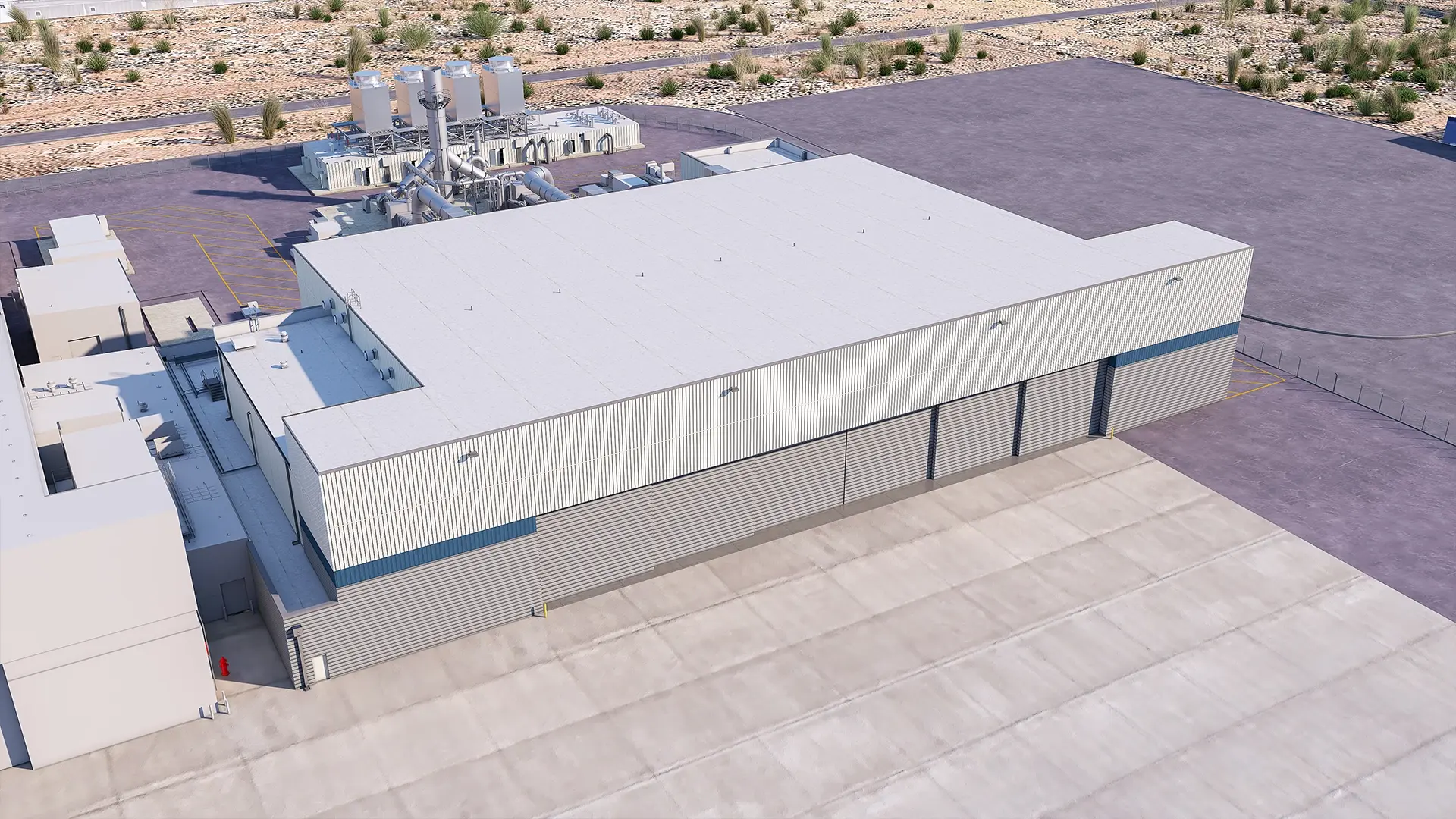
Roofs Over Production
A manufacturing roof is rarely the asset that draws attention until it threatens the one that does: the line running beneath it. We advise plant owners, operators, and the firms that hold industrial real estate on roof condition, capital timing, and risk so that roofing decisions are made on the owner's terms rather than dictated by the next failure over a production cell or a finished-goods aisle. We install nothing and bid nothing, which means our read of a roof is independent of any contractor selling the repair.
The roof is judged by what runs underneath it
On most commercial buildings, a leak is an inconvenience. Over a production floor it can stop a line, contaminate a batch, trip energized switchgear, or force an unplanned shutdown that costs far more than the section of membrane that failed. That asymmetry changes how a manufacturing roof should be evaluated. We weight every condition finding by what sits below it, so a small defect over sensitive equipment or raw stock is treated with the urgency it actually carries, while a comparable defect over a low-consequence bay is queued accordingly.
This is the part of roof strategy that generic inspections tend to flatten. A contractor walking the roof reports membrane condition; an owner needs that condition mapped against the use of the space below. We build that map first, then form recommendations that protect uptime ahead of the membrane, because a watertight roof over an empty dock is worth far less attention than a marginal one over a coating line.
It also keeps roof spending honest. When findings are ranked by consequence rather than by appearance, an owner can defer the right things with confidence and act early only where a failure would reach the floor. The alternative, treating every defect as equal, either overspends on roofs that could safely wait or underspends on the few that cannot.
Process exposure ages these roofs differently
Industrial atmospheres are hard on roofing in ways a published service-life estimate never captures. Process exhaust, grease, solvents, heat, and chemical fume attack membranes and flashings at rates that vary dramatically across a single roof, so that one quadrant near the exhaust stacks fails years ahead of an identical membrane fifty feet away. We document those exposure zones explicitly and match the assessment to the system actually in place, because chemical and thermal tolerance differ sharply between TPO, PVC, EPDM, modified bitumen, and an aging built-up roof.
A single plant frequently carries several of those systems at once, installed across different expansions and ownership eras, each aging on its own curve and carrying its own warranty. Treating that patchwork as one homogeneous surface is among the most expensive mistakes we see. Where a roof is being planned for the long term, material selection becomes a capital decision rather than a product preference, and the right membrane for a solvent-heavy bay is rarely the right one for a clean assembly hall.
Exposure factors we track on a plant roof
- Concentrated heat, fume, and condensate plumes around exhaust stacks and process vents
- Grease and oil migration near coating, machining, or kitchen operations that degrade certain membranes
- Chemical fallout and washdown overspray attacking seams, sealants, and metal flashings
- Heavy rooftop equipment loads, vibration, and frequent maintenance foot traffic along service routes
- Constant new penetrations from added conduit, gas lines, and dust collection that compromise the watertight plane over time
Finding the moisture the surface hides
Trapped water inside a roof assembly is invisible from above, yet it is the failure mode that ends industrial roofs early. Water that has bypassed a seam saturates the insulation, corrodes steel deck from the top side, and freezes and re-expands through every winter until the system fails structurally rather than cosmetically. By the time it shows as a stain on the production floor, the wet area is usually many times larger than the leak that started it.
This is why infrared moisture surveys carry so much weight on a plant roof. A nighttime infrared scan, confirmed with core samples or a capacitance survey, lets us quantify wet insulation as a percentage of the field and locate it precisely. That converts a vague worry into a defensible number, the kind that justifies a targeted tear-off of one saturated bay instead of a reactive replacement of the entire building. It also tells an owner which roofs are genuinely sound beneath an unattractive surface and can safely be left alone.
Capital timed around the plant, not the calendar
Reroofing a live plant is a logistics problem before it is a roofing problem. Tie-offs, crane picks, hot-work permits, dust and odor control, and protection of running equipment all have to be planned around shifts that may never fully stop. We help owners sequence roof capital so the disruptive work lands during planned downtime, scheduled changeovers, or seasonal slowdowns, and so phasing follows the building's operational map rather than an arbitrary fiscal date.
That planning rests on a defensible read of remaining service life and on the cost curve of continued deferral. Deferred maintenance on a low-slope roof does not hold steady; it compounds. A membrane needing forty thousand dollars of seam and flashing work this year becomes a saturated, structurally compromised system requiring full replacement in five, at many times the cost. We model that curve explicitly so a roof line item competes for capital on honest terms against the equipment and capacity requests sitting beside it.
Restoration as a timing tool
On a sound substrate, a roof coating or spray polyurethane foam (SPF) system can extend a serviceable membrane's life and reset its warranty without the disruption of a tear-off, which matters when a full replacement would mean idling a line. But coatings are routinely oversold, and they are no cure for a wet roof. We tell owners plainly when a section is a strong restoration candidate and when coating it would simply entomb trapped moisture and waste the spend. The honest answer protects capital either way.
Warranty exposure across rooftop trade work
Manufacturing roofs frequently carry long-term manufacturer warranties, twenty or thirty years on the membrane, and those warranties are voided quietly all the time. The usual cause is uncoordinated rooftop work: a new exhaust fan or process unit cut in by a mechanical contractor who is not a certified applicator, flashed incorrectly, and the no-dollar-limit coverage on the entire field is gone the moment a third party touches the membrane. Most owners learn this only when a claim is denied.
We help owners organize and defend that exposure: consolidating warranty documents, recording installation dates and certified applicators, and putting a simple control in place so any rooftop trade work is coordinated against the warranty terms before a contractor cuts the membrane. For plants weighing rooftop solar, this matters enormously, since an array installed without manufacturer coordination can forfeit the roof warranty for its full remaining term. We make sure that trade-off is decided with the facts in front of you rather than discovered afterward.
Documentation that survives the decision
Manufacturing roof spend competes against automation, tooling, and capacity, and it has to be justified to people who never set foot on the roof. We produce the record that supports that case: condition findings tied to specific areas and risks, photo and infrared documentation, warranty status with the maintenance obligations that keep coverage intact, and a multi-year forecast suitable for reserve planning and budget review. Recognized references, NRCA guidance on system selection and ASTM testing for moisture and membrane performance, give that record a vocabulary that holds up in front of finance, a lender, or an insurer.
We stay on the owner's side of the table through the work that follows. When a project moves forward, we help define scope, hold competing proposals to the same condition baseline, and confirm that what was specified is what gets installed. The result is a roof program a plant can plan around with confidence, documented as carefully as the assets it protects, rather than one that surfaces only when it interrupts production.