Roofs Over Critical Operations
A hospital roof is not a building component that can fail quietly. The space beneath it runs continuously, and the consequences of water intrusion are measured in displaced patients, shuttered procedure rooms, and remediation that cannot wait for a convenient budget cycle. We advise health systems on their roofing assets from the owner's side of the table, which means our loyalty is to the condition of the roof and the integrity of the operation below it, not to the sale of a reroof. Our role is to give facility executives, real estate teams, and capital planners a clear, defensible picture of what they own, what it will cost over time, and when each decision needs to be made.
Why Healthcare Roofs Behave Differently
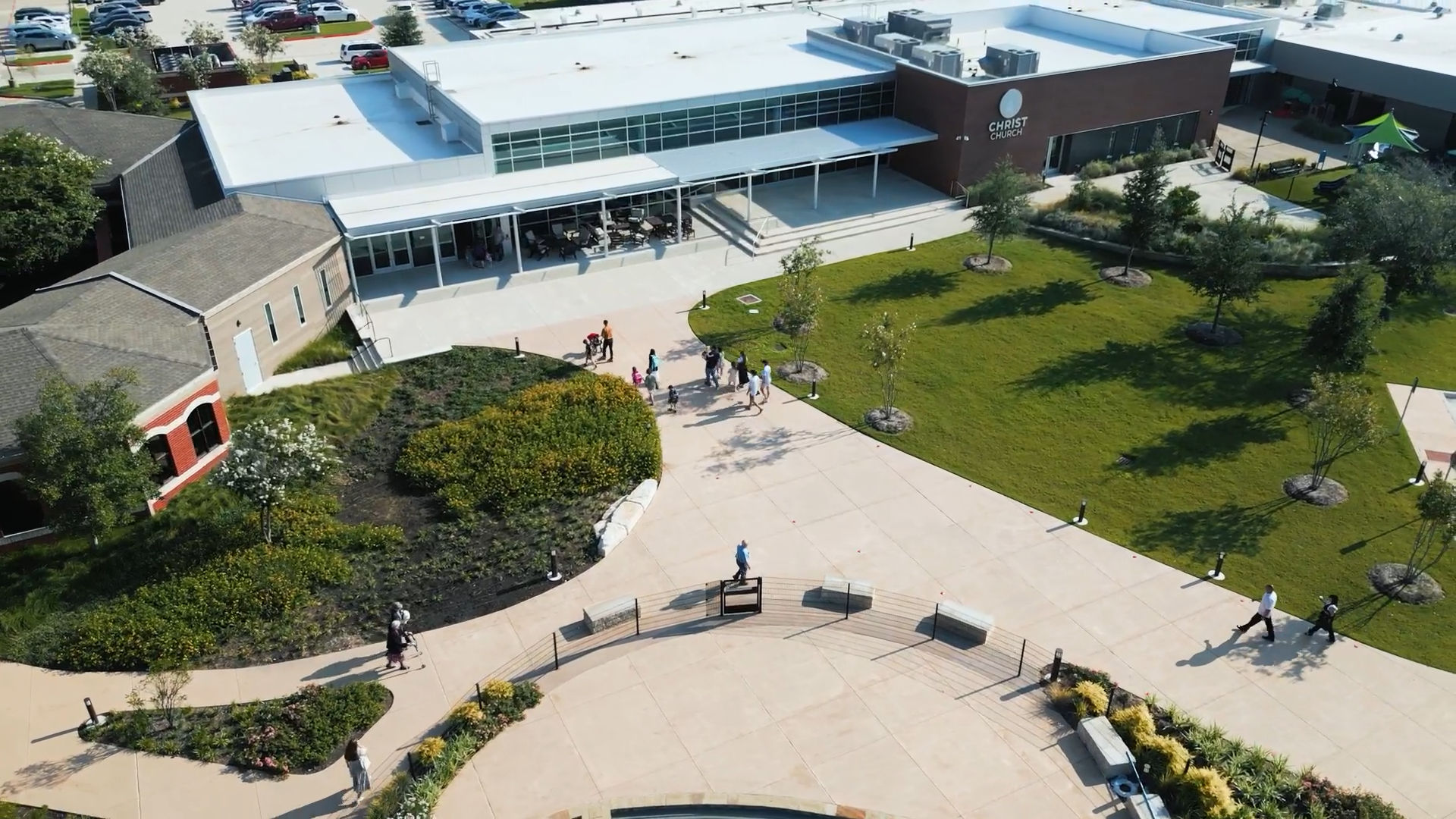
Acute-care roofs carry an unusual burden. They are dense with rooftop mechanical equipment, chillers, air handlers, exhaust fans, medical-gas relief vents, and the curbs, penetrations, and condensate lines that come with them. Each penetration is a potential failure point, and the foot traffic from maintenance crews servicing that equipment accelerates wear on the membrane long before its rated life is reached. Above operating suites, imaging, sterile processing, and pharmacy, the tolerance for moisture is effectively zero, and a single saturated insulation board can compromise air quality and infection-control conditions in the space below.
The membranes themselves are usually single-ply, TPO or PVC, sometimes EPDM on older wings, occasionally modified bitumen or coatings on additions that were built piecemeal over decades. A large hospital campus is rarely one roof; it is a patchwork of systems, ages, and warranties stitched together as the facility grew. That fragmentation is exactly where owner-side advisory earns its keep, because no single contractor or vendor sees the whole picture and few facilities teams have the time to assemble it.
What Actually Sits Beneath Each Roof
The most important layer in a healthcare roof assessment is not the roof plan; it is the program directly below it. A modest membrane defect over a mechanical mezzanine is a low priority. The identical defect over a surgical suite, a data closet, a linear accelerator vault, or a pharmacy clean room is an emergency. We map roof risk against occupancy and function, so that condition scores reflect consequence rather than square footage alone, and so that limited dollars protect the spaces where a leak would do the most harm.
The downstream costs compound in ways that dwarf the roof itself. Water above sterile processing can halt instrument reprocessing and ripple into surgical scheduling. Moisture near an air handler can introduce contamination concerns that trigger remediation and scrutiny under the standards governing the care environment. Intrusion near electrical or low-voltage infrastructure can take imaging or patient monitoring offline. When we brief leadership on a roof, we frame it in these terms, because a capital committee responds to operational and clinical exposure far more decisively than to a description of seam condition.
What We Do for Health Systems
We build and maintain a roof condition baseline across the entire campus or system, then translate it into the language your capital committee actually uses. Infrared moisture surveys locate wet insulation before it migrates and before it shows up as a stained ceiling tile in a patient room. Core sampling confirms the assembly and the extent of saturation. From there, we model the deferred-maintenance cost curve, the point at which patch-and-repair spending stops being economical and a planned reroof becomes the responsible decision, so that work is scheduled rather than forced by a 2 a.m. leak call over an occupied unit.
- Roof-by-roof condition assessment and infrared moisture mapping across the campus
- Warranty inventory and documentation, including manufacturer obligations, NDL terms, and expiration tracking
- Capital forecasting and reserve input tied to remaining service life, not guesswork
- Repair-versus-replace analysis with infection-control and continuity constraints built in
- Independent review of contractor scopes, change orders, and closeout documentation
We work for the owner and only the owner. We do not install roofs, sell membrane, or take referral fees from contractors, which means our condition findings and capital recommendations carry no incentive to recommend more work than a roof needs. That independence is the entire point: facilities and finance leadership get a basis for decisions they can defend to a board, an insurer, or an accreditation surveyor.
Continuity and Infection Control as Design Constraints
Reroofing over an occupied hospital is a clinical problem as much as a construction one. Tear-off generates dust, odor, and vibration that travel through the building envelope and into pressure-sensitive spaces. We help owners scope phasing, negative-air protection, and tear-off sequencing so that the work respects the infection-control risk assessment governing the rooms below, and we make sure those constraints are written into the project documents before a contractor is selected rather than discovered as a dispute mid-project.
Sequencing also has to respect the fact that a hospital never closes. Unlike a school with a summer window or an office with a weekend, an acute-care facility offers no clean shutdown. The work has to be staged around live operations, with contingency for weather exposure on a building that cannot tolerate an open deck over a critical area. We treat these realities as governing parameters of the project, not as afterthoughts, and we hold the eventual contractor to them.
Coordinating the Roof With the Equipment Above It
On a hospital, the roof and the mechanical plant are inseparable. Equipment is replaced, added, and relocated on its own schedule, and every one of those changes touches the membrane through new curbs, supports, and penetrations. Too often that work happens without reference to the roof's age or warranty, leaving a patchwork of penetrations cut by trades who never coordinated with one another. We help owners get ahead of this by sequencing major roof replacements with planned equipment changeouts where it makes sense, so a chiller swap and a reroof are not paid for twice or executed in conflict.
Protecting the Warranty and the Record
Healthcare facilities are audited, surveyed, and inspected on a schedule, and the roof is part of the facility of record. When a manufacturer's warranty is in force, routine repairs made by the wrong contractor or with the wrong materials can void coverage on an asset worth millions to replace. The same penetrations that keep the hospital running, every new vent and equipment support, are a common way coverage is quietly forfeited. We hold the warranty together so the protection the system paid for is still there when a failure occurs.
- A current registry of which roofs carry which coverage, on what terms, and through what date
- A penetration protocol so no trade alters a warranted roof without notification and approved detailing
- The inspection and maintenance records manufacturers require before they will honor a claim
- Documentation of every assessment, repair, and capital decision that withstands outside scrutiny
When a roof does fail under warranty, the difference between a covered repair and a denied claim is almost always documentation, and that documentation has to exist before the failure rather than be reconstructed after it.
Energy, Reflectivity, and Resilience
Hospitals are among the most energy-intensive buildings in the country, and the roof is a meaningful lever. Where energy matters, we evaluate reflective single-ply membranes and added insulation against the continuous cooling load these buildings carry, treating reflectivity and R-value as cost factors the facility can model rather than marketing claims. At the moment of replacement, these measures are often the most cost-effective efficiency improvements available, and they may qualify under utility or efficiency programs.
Resilience is equally non-negotiable. A hospital cannot lose its envelope in a wind event, and roof edge detailing, fastening patterns, and rooftop equipment anchorage are where storms find the weakness. We advise on resilience priorities so the roof contributes to the facility's ability to remain operational when the surrounding community needs it most, rather than becoming the point of failure.
The Outcome We Manage Toward
The result is straightforward. Your facilities team stops reacting to leaks and starts managing an asset on a known schedule with a known budget. Your capital planners get numbers they can forecast against and defend. Your warranties stay intact, your documentation stands up to an accreditation survey, and the spaces where care is delivered stay dry, which is the only outcome that ultimately matters. Managed well, the roof recedes into the background where it belongs; managed poorly, it surfaces in the worst possible place at the worst possible time, and our work is to keep it firmly in the former category.