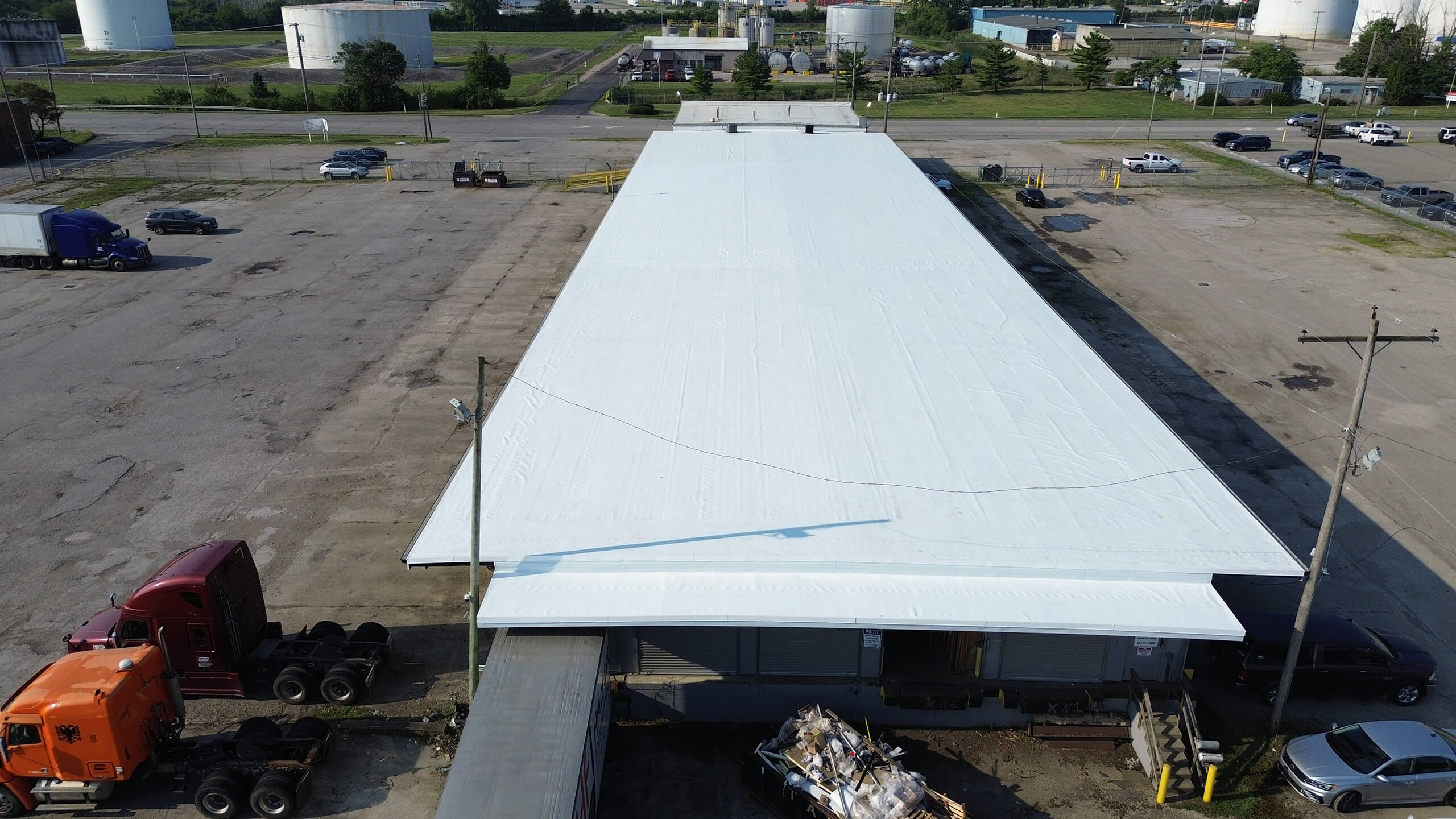
Energy and ESG on the roof
The roof is the largest single surface most buildings present to the sun, and it is increasingly where energy performance and ESG reporting come together as a measurable line item. We advise owners on cool-roof strategy, reflective coatings, and roof-related sustainability decisions the same way we advise on any capital question: grounded in the building's actual energy profile, climate zone, and roof condition, not in marketing claims about a product or a label on a report. The roof can do real work for an owner's energy and disclosure goals, but only when the analysis is honest about where the savings come from and where they do not.
Reflectivity is a tool, not a default
A high-albedo roof reduces cooling load and surface temperature, and on a cooling-dominated building in a warm climate the energy case can be straightforward. But reflectivity is a regional decision. In heating-dominated northern climates, a reflective surface can increase winter heating demand, and the net annual energy benefit narrows or, on some assemblies, reverses. The honest answer depends on the building's cooling-to-heating ratio, the roof assembly, and the rate the owner actually pays for energy. We have seen reflective roofs sold into climates where the payback math never closes, and the owner is left with a white roof and a story rather than a return.
We frame the decision around values that hold up to scrutiny rather than catalog figures. Solar reflectance and thermal emittance, expressed together through the Solar Reflectance Index, degrade as the surface weathers and soils, so we model aged performance rather than the initial laboratory numbers a manufacturer reports. A membrane that tests near the top of the scale when new may shed a meaningful fraction of its reflectance in the first few years on a roof that collects industrial fallout or organic growth.
- Climate zone and the building's cooling-versus-heating balance.
- Aged solar reflectance and thermal emittance, not just initial values.
- Roof assembly, insulation level, and whether the deck is the real thermal weak point.
- Local energy rates and the realistic payback against the alternatives.
Where the surface stops and the insulation begins
Owners are frequently sold reflectivity as the lever when the real opportunity is under the membrane. A cool surface manages the heat that reaches the roof; the insulation governs how much of that heat enters the building at all. On a poorly insulated assembly, adding R-value at the next replacement usually delivers a larger and more durable energy benefit than reflectance alone, and it works in both heating and cooling seasons rather than just one. The two strategies are not in competition, but they answer different questions, and the order of priority matters to the capital case.
This is also where building codes increasingly intervene. Many jurisdictions now require minimum insulation values when a low-slope roof is replaced, and some require minimum reflectance as well. Meeting those requirements is far cheaper as part of a scheduled tear-off than as a standalone retrofit, because the crew, the staging, and the disruption are already paid for. We surface these obligations early so the owner is improving thermal performance at the natural replacement point rather than discovering a code trigger mid-project.
Coatings, membranes, and the condition underneath
Reflective performance can be delivered through a coating applied to an existing roof or through the membrane itself. White TPO and PVC are reflective by composition; aged EPDM, modified bitumen, and built-up roofs can be brought up through acrylic or silicone coatings. A coating can also extend the service life of a sound but aging roof and defer a full replacement, which is frequently the larger financial story, because the deferral of a capital event tends to dwarf the annual energy line.
A coating is only as good as the surface beneath it, and applying one over wet insulation or a failing membrane buys a cosmetic result and a trapped problem. We confirm the assembly is dry and sound, through infrared moisture survey where warranted, before treating a coating as a sustainability or service-life investment. The roof's condition, not the product brochure, sets what is possible. Silicone and acrylic systems also behave differently under ponding water and foot traffic, and the right chemistry depends on the roof's drainage and use rather than the coater's preference.
Coatings carry warranty implications owners are rarely shown clearly. A restoration coating typically comes with its own manufacturer warranty distinct from the original membrane's, with its own maintenance conditions and exclusions. We read those terms before the work is committed, so the sustainability upgrade does not quietly trade away coverage the owner is still relying on.
Reporting owners can defend
Roof decisions increasingly land in ESG disclosures, green building certifications, and lender or investor reporting, where the standard is documentation that survives third-party review. A reflective roof contributes to certification credits and reported energy intensity, but only with the product data, installation records, and measured or modeled performance to support the claim. We assemble that record so the sustainability story is backed by evidence rather than assertion, and so a future auditor finds a file rather than a press release.
For owners pursuing certification or reporting against a portfolio target, we connect the roof to the building's broader energy strategy, including whether the roof should be reserved for future solar and how a reflective or insulated assembly affects that path. A roof that will carry a rooftop array within its service life changes the calculus today: membrane choice, attachment detailing, and remaining life all need to anticipate the array rather than be reworked around it later. Installing a photovoltaic system over a membrane with five years left is a costly mistake that a coordinated capital plan avoids.
Performance that has to be maintained, not assumed
The energy benefit of a cool roof is not a one-time event; it is a stream that depends on the surface staying reflective. Dirt, biological growth, and ponding residue all dull a light-colored membrane, and a roof that is never cleaned can lose much of its working reflectance well before it loses its waterproofing. Owners who book the savings at installation and then ignore the surface are, in effect, watching the return decay quietly year over year. We treat reflectance as a maintained asset and build the upkeep into the operating expectation rather than the marketing claim.
Sustaining the performance is mostly a matter of routine attention to the things that degrade it, and the same attention protects the waterproofing and the warranty at the same time. The discipline is unglamorous and inexpensive relative to what it preserves:
- Periodic cleaning where soiling or organic growth is measurably cutting reflectance.
- Keeping drains and scuppers clear so ponding does not stain and degrade the surface.
- Recoating reflective coatings on the manufacturer's schedule before the film thins past its rated life.
- Repairing breaches promptly so wet insulation does not erase the thermal benefit the assembly was sold on.
When the upkeep is planned and recorded, the energy and disclosure benefits the owner reported at the outset remain real and defensible. When it is not, the roof drifts toward the performance of an ordinary dark surface while the owner continues to report numbers that no longer hold.
Incentives, timing, and the capital case
Utility rebates, energy-efficiency programs, and code-driven requirements can shift the economics of a cool-roof or re-insulation project, and several jurisdictions now require minimum reflectance or insulation values when a roof is replaced. Capturing incentives means aligning the work with program rules and timing, which is rarely the same as the contractor's preferred schedule. Programs change, fund balances run out, and documentation requirements are specific; we treat the incentive as part of the project design, not an afterthought to be chased once the work is done.
We integrate the sustainability decision into the capital plan so that reflectivity, added insulation, and incentive capture are evaluated at the natural replacement point, when the marginal cost is lowest. Adding insulation to meet current code, for instance, is far cheaper as part of a scheduled tear-off than as a standalone retrofit, and the energy benefit often outlasts the reflective surface itself. Treated this way, a sustainability upgrade is a disciplined improvement to a planned expense rather than a separate cost layered on top of it, and the owner can defend every dollar of it to a board, a lender, or an auditor.