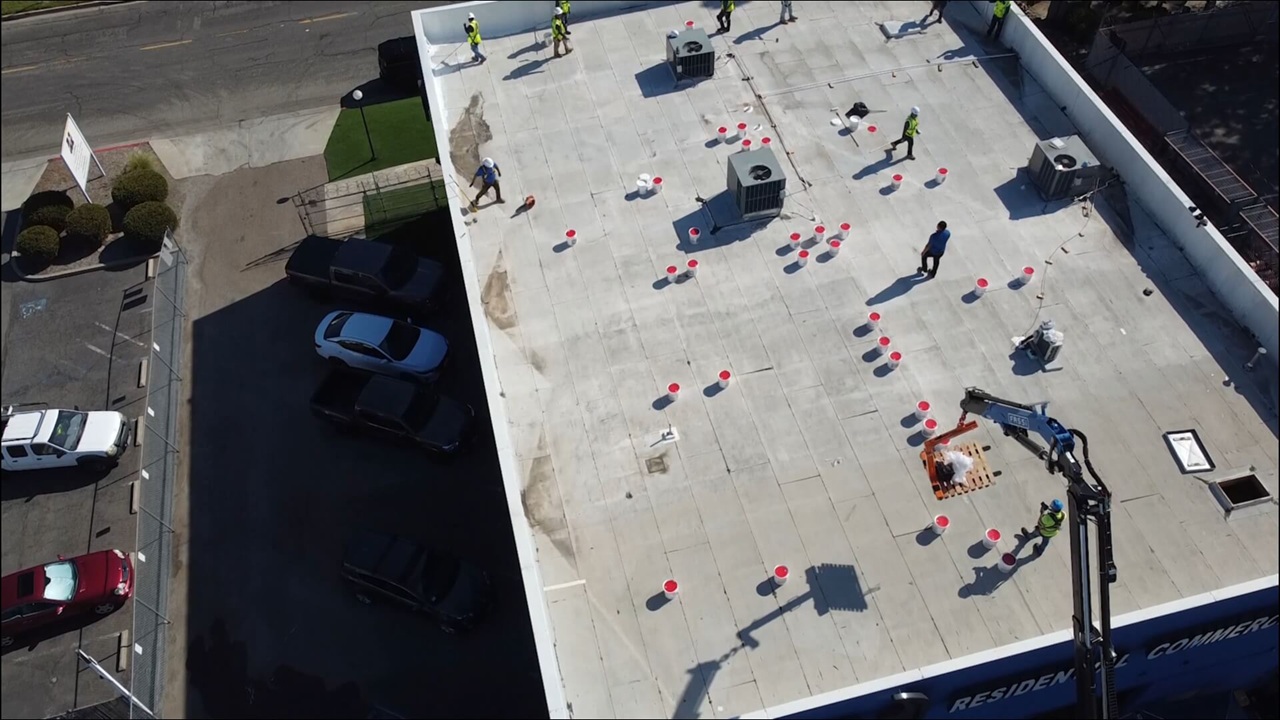
Funding the roof line
A reserve study is only as good as the assumptions behind its largest line items, and on most commercial buildings the roof is the largest. When the roof allowance is built from a flat 20-year rule of thumb instead of the actual membrane, age, and condition on the deck, the reserve is either over-funded and starving other priorities or under-funded and setting up a special assessment. We perform roof reserve studies as a standalone owner-side engagement: a defensible remaining-life and replacement-cost forecast for every roof area in a building or portfolio, grounded in what is physically on the roof rather than a generic table.
What a roof reserve study actually establishes
The purpose is to answer three questions with enough rigor that an auditor, lender, or board will accept them: how much remaining service life does each roof section have, what will it cost to replace when that life ends, and how much should be set aside each year between now and then. We separate roof areas by membrane type and installation vintage because a 2009 mechanically attached TPO and a 2015 adhered PVC on the same building do not age on the same schedule and should not share a single allowance.
For each area we document the system, attachment method, insulation type and R-value, drainage configuration, and the warranty status, then assign a remaining useful life based on observed condition rather than installed date alone. A 15-year-old EPDM roof with sound seams and dry insulation may have eight years left; a 9-year-old roof with chronic ponding and saturated cover board may have two. The study captures that distinction in numbers, not adjectives.
Where standard reserve tables go wrong on roofs
Generic reserve software treats the roof as a single component with a fixed useful life and a cost pulled from a regional index. That approach produces a clean spreadsheet and a wrong number. The most common failures we correct are predictable.
- One blended roof line for a building with three different membranes installed in three different years.
- Replacement cost estimated as membrane-only, ignoring deteriorated insulation, parapet and edge metal, and tear-off of multiple existing plies.
- No allowance for code-driven cost escalation such as added insulation to meet current energy code at reroof, or required secondary drainage.
- Useful life carried at the manufacturer warranty term rather than realistic service life, which understates timing on some systems and overstates it on others.
- No recognition of restoration pathways such as coatings or recover that can defer full replacement and change the funding curve entirely.
How we build the forecast
Every study begins on the roof. We measure and map each area, core or scan suspect zones to verify insulation condition, and photograph defects against a consistent rating scale so the condition basis is auditable. From that field data we model replacement cost per square foot by assembly, including tear-off, deck repair allowances, insulation to current code, the new membrane, flashings, edge metal, and the realities of phasing work on an occupied or operating building.
We then translate condition into a funding schedule. For a roof with a defined remaining life, the annual contribution is the projected replacement cost, escalated to the replacement year, divided across the years of remaining service, net of any reserve balance already allocated. Where a restoration or recover is viable, we model both paths so ownership can see the funding difference between deferring with a coating versus committing to full replacement, and choose deliberately rather than by default.
Single building versus portfolio reserves
For a single asset the deliverable is a roof-specific reserve schedule that drops cleanly into the building's broader capital plan. For a portfolio the value compounds. When we study roofs across many properties on one rating standard, the aggregate funding curve smooths: replacements that would each trigger a lumpy special outlay become a predictable annual line, and the owner can sequence work to level spend year over year rather than absorbing several roofs landing in the same fiscal period.
Portfolio-level studies also surface concentration risk that single-building reserves hide, such as a cluster of same-vintage roofs from one development era that will all reach end of life within a narrow window. Knowing that three years ahead is the difference between an orderly bid program and an emergency one.
Keeping the study current
A reserve study is a snapshot, and roofs change. Storm damage, a leak that saturates insulation, or a deferred repair that accelerates membrane failure all move the remaining-life number. We recommend updating the roof reserve on a defined cycle and after any significant event, so the funding schedule tracks the actual asset rather than a condition that was true three years ago.
Because we work owner-side and do not perform the replacement work, the remaining-life calls and cost forecasts carry no incentive to accelerate spending. The number is built to fund the roof correctly, defend the reserve in an audit or lender review, and give ownership the lead time to replace on its own schedule instead of the leak's.