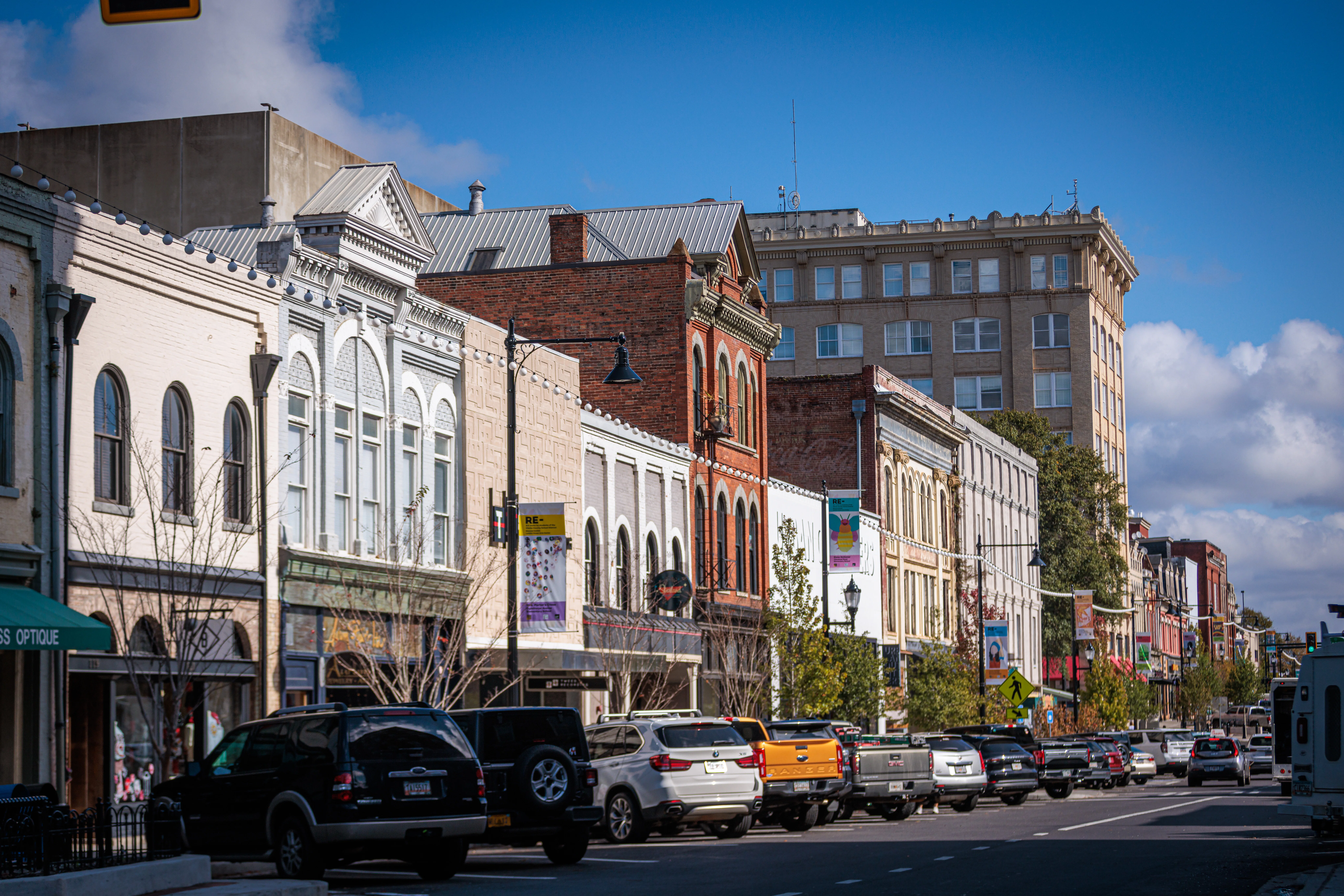
Georgia statewide
Georgia's commercial roof stock has exploded outward from Atlanta, and the metro's sprawl of office parks, data centers, and the largest industrial market in the Southeast now sits alongside the deepwater logistics engine of the Port of Savannah and a fast-growing film and manufacturing base. These roofs face a humid subtropical workload that rarely lets up: long, intense summers of heat and UV that age membranes, frequent heavy thunderstorms, and a spring hail season that can dent and split a low-slope roof in minutes. Winters bring just enough freeze-thaw to open seams that summer baked. For owners holding distribution centers along I-85 or office and retail across metro Atlanta, that mix shortens service life unevenly across a portfolio. We advise owners, REITs, and asset managers on documented condition, capital planning, and contractor oversight grounded in it.
The Georgia commercial markets we cover
Metro Atlanta dominates the state's commercial inventory, and the roofs that come with it are overwhelmingly low-slope membrane on large footprints. The Interstate 85 corridor northeast toward Gwinnett, the I-20 spine east and west, and the enormous distribution clusters around Hartsfield-Jackson, McDonough, and the Henry County logistics submarket have produced millions of square feet of single-ply roofing on big-box fulfillment and manufacturing buildings. These are the roofs where a small detail failure quietly compounds across acres of membrane before anyone inside notices. The sheer scale of these footprints changes the math of roof management: on a single building of several hundred thousand square feet, a deferred repair is not a small line item, and a forced replacement can dominate a year's capital budget on its own.
Beyond Atlanta, the building stock shifts with the geography. Savannah and the Port of Savannah have driven coastal warehouse and intermodal growth, and those roofs sit in a salt-laden, hurricane-exposed environment that Atlanta's do not. Augusta carries medical, federal, and manufacturing facilities; Columbus and the Fort Moore region add institutional and industrial roofs; Macon sits at the freight crossroads of the state; and Athens blends university-adjacent commercial property with light industry. We track each of these markets as a distinct risk environment rather than treating "Georgia" as one climate.
What actually drives roof failure here
Georgia is hot, humid, and wet, and the roof assemblies most common across the state are punished by exactly those conditions. The dominant failure drivers we plan around are these:
- Prolonged heat and ultraviolet exposure that degrades membranes, accelerates seam and adhesive aging, and shortens the realistic service life of darker or unreflective roofs across long Southern summers.
- Heavy convective rainfall and thunderstorm activity that overwhelms undersized or clogged drainage, exposes any flashing or detail weakness, and turns minor ponding into chronic standing water.
- Hail and severe straight-line wind from the spring and summer storm season, which bruises membranes, fractures aged coatings, and lifts edges and parapets on buildings whose perimeter attachment was never verified.
- High ambient humidity and large daily temperature swings that drive condensation and trapped moisture within the assembly, particularly where vapor control was poorly detailed or insulation has taken on water.
- On the coast near Savannah and Brunswick, tropical-system rainfall, storm-surge-driven wind uplift, and salt exposure that corrodes fasteners, edge metal, and rooftop equipment far faster than inland.
- Vegetation and organic debris from Georgia's heavy tree canopy, which collects in drains and low points, holds moisture against the membrane, and accelerates surface breakdown on roofs that are not kept clear.
The state's geography also splits its risk in a way owners should plan around. Inland buildings across the Piedmont and the Atlanta metro are driven mostly by heat, hail, and convective storms, while the coastal plain and the Savannah corridor add the tropical and salt exposure of a hurricane-prone shoreline. A portfolio that spans both, as many do, cannot be managed to a single assumption; the same membrane and the same age will age differently in Gwinnett than in Chatham County.
None of these are exotic. What makes them costly is that they act slowly and out of sight. Trapped moisture and creeping seam failure rarely announce themselves until the deck is compromised or the tenant reports interior damage, and by then the conversation has moved from maintenance to replacement. Our role is to catch the trajectory early, while the fix is still cheap.
Owner-side condition reporting
For an owner or asset manager, the foundational deliverable is an honest, standardized condition report for every roof in the portfolio. We document membrane type and age, attachment and seam condition, flashing and penetration detailing, drainage performance, insulation moisture where conditions warrant investigation, and the realistic remaining service life of each system. We photograph and locate defects so a report written this year is directly comparable to next year's, which is what lets you see a roof deteriorating rather than merely learning that it has failed.
Because we sit on the owner's side of the table, our reporting is not built to sell a re-roof. A roof with serviceable life left should be maintained and monitored, not replaced because a crew is available. That distinction matters most across a multi-building Georgia portfolio, where dozens of roofs of different ages and types compete for the same capital, and where the difference between a defensible plan and a reactive one is measured in millions over a hold period.
Capital planning and warranty exposure
Georgia's institutional owners increasingly hold large, relatively young distribution and manufacturing roofs alongside older retail, office, and mixed-use assets. Those two groups demand opposite strategies. The newer logistics roofs are about protecting and extending an existing investment through disciplined maintenance and warranty compliance; the older inventory is about sequencing replacements so they land deliberately rather than as emergencies. We build multi-year capital forecasts that put every roof on a funded timeline, so budgeting reflects the real condition of the stock instead of last year's surprises.
Warranty exposure is where owners quietly lose the most money in this state. Manufacturer warranties on single-ply systems carry strict conditions, and routine realities of Georgia roofs put those conditions at risk:
- Unauthorized rooftop work, equipment additions, and penetrations made by tenants or trades that void coverage on the affected areas.
- Drainage and ponding conditions that exceed warranty limits during the state's heavy rain season and can disqualify claims.
- Storm and hail damage that goes undocumented and unfiled within the required window after a severe-weather event.
- Missing or absent maintenance records that the manufacturer requires as a precondition to honoring the warranty.
We track warranty terms, expiration dates, and compliance obligations across the portfolio and flag the routine actions that keep coverage intact, so a six- or seven-figure asset is not silently uninsured against the next storm.
Managing roofs across a Georgia portfolio
Most owners we work with do not have a single building in one ZIP code; they have a spread of assets across the Atlanta metro and out into the secondary markets, often acquired at different times and roofed by different contractors to different standards. Managing that coherently means one set of standards applied everywhere, one record per roof, and one schedule of inspections, maintenance, and planned capital that the owner can actually see.
We provide that layer. We inspect after major storm events when a portfolio-wide hail or wind pass warrants it, we scope and competitively bid the work that genuinely needs doing, and we hold contractors to the documented condition rather than to their own estimate. That independence matters in a state where severe-weather seasons reliably bring a wave of roofing solicitations; an owner with documented condition data and a standing plan is in a far stronger position than one fielding storm-chasing bids with no baseline of their own. It also sharpens transactions: when a Georgia asset is bought, sold, or refinanced, a current and credible roof record removes a recurring point of friction from due diligence. For owners and asset managers carrying commercial property anywhere in Georgia, the result is straightforward: roofs that are understood, budgeted, and protected, with decisions made by the people who own the risk rather than by whoever happened to be on the roof last.