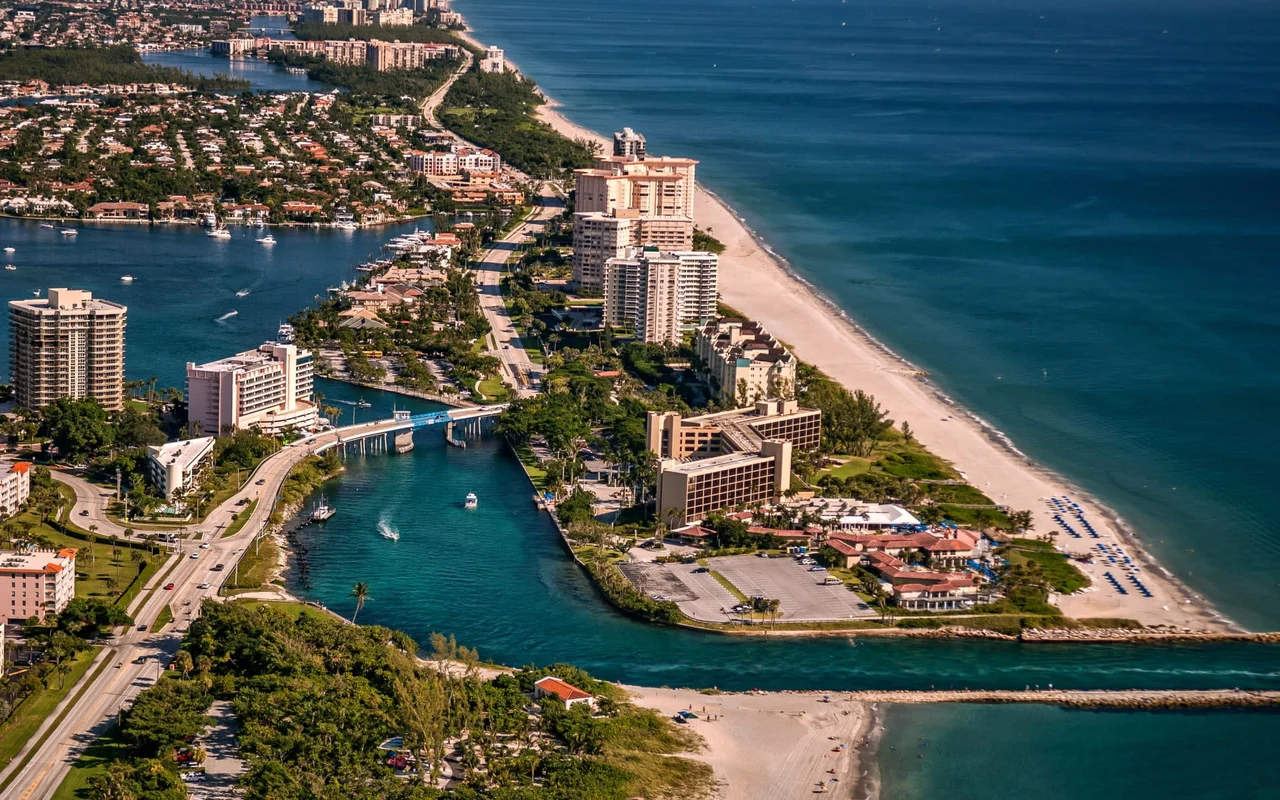
Florida statewide
No state stresses a commercial roof the way Florida does, because the hazards stack rather than alternate. Year-round UV and heat break down membranes and coatings faster than almost anywhere in the country, daily summer storms pond water on low-slope decks that drain slowly, salt air corrodes fasteners and edge metal on every coast, and over all of it sits a hurricane season that can rewrite a capital plan in a single landfall. The building stock is just as exposed — South Florida's aging coastal high-rises and condominiums, the I-4 corridor's vast warehouse and hospitality base, and the ports of Tampa and Jacksonville. With insurers scrutinizing roof age and post-Surfside reserve studies now mandatory, we give owners, REITs, and asset managers an independent read on condition, reserves, and warranty exposure before the next storm or the next renewal arrives.
The Florida commercial markets we serve
Florida's commercial roof stock is enormous, geographically spread, and unusually exposed. South Florida — Miami-Dade, Broward, and Palm Beach — concentrates high-rise office, hospitality, healthcare, and a vast condominium and mixed-use inventory, much of it coastal and much of it aging. The I-4 corridor linking Orlando and Tampa is the state's logistics and tourism engine, with millions of square feet of warehouse, distribution, hospitality, and theme-park-adjacent commercial roofing.
Across the rest of the state the building mix is just as varied:
- Tampa Bay — port operations, industrial and distribution facilities, downtown office, and dense low-lying coastal commercial property highly vulnerable to surge.
- Jacksonville — one of the Southeast's major logistics and port hubs, with large distribution, manufacturing, and corporate office stock.
- Orlando — hospitality, healthcare, the Lake Nona medical and life-sciences cluster, and convention-driven commercial buildings.
- Southwest Florida — Fort Myers, Naples, and Sarasota, where retail, healthcare, and hospitality continue to expand on a hurricane-exposed Gulf coast.
- Tallahassee and the Panhandle — government, university, and a Gulf coast still rebuilding from major landfalls.
For an owner holding assets in more than one of these markets, the demand is a single consistent standard for documenting condition, funding reserves, and approving repairs across buildings that face very different storm and surge exposure.
Florida's regulatory environment adds a dimension that does not exist in most states. In the wake of the 2021 Surfside collapse, the legislature enacted milestone structural inspection requirements and mandatory structural integrity reserve studies for condominium and cooperative buildings of three or more stories — and the roof, as a primary line of water defense and a significant reserve component, sits squarely inside that scope. For owners and associations holding multi-story coastal assets, roof condition is no longer just a maintenance question; it is tied to inspection compliance and reserve funding that the state now requires.
What Florida's climate does to commercial roofs
Florida is the most hostile roofing environment in the continental United States, and the drivers compound one another. Intense year-round sun and UV radiation break down membranes and coatings faster than almost anywhere else, while extreme heat and humidity stress adhesives, seams, and rooftop equipment continuously. Daily summer thunderstorms deliver heavy rain and frequent lightning, and the flat, low terrain means many commercial roofs drain slowly and pond.
Above all of that sits hurricane and tropical-storm exposure that defines how we plan in this state:
- Wind uplift from hurricanes and severe thunderstorms that finds marginal edge metal, parapet terminations, and fastening patterns — the leading cause of catastrophic roof loss in Florida.
- Wind-driven rain that penetrates seams and details a dry-weather inspection would never reveal, often causing more interior damage than the wind itself.
- Storm-borne debris and the aftermath of major landfalls — Andrew, Irma, Michael, and Ian among them — which continue to shape Florida's building code and insurer expectations.
- Coastal salt air statewide, corroding fasteners, edge metal, flashings, and rooftop units, and accelerating failure on waterfront buildings.
- Relentless UV and ponding that degrade membranes long before any storm, shortening service life across the board.
Florida also operates one of the most demanding roofing code regimes in the country — including the High-Velocity Hurricane Zone requirements in Miami-Dade and Broward — and product approvals, uplift ratings, and reroofing rules vary by jurisdiction. We factor those requirements directly into condition findings and capital planning, because a roof that is not code-compliant is both an insurance problem and a permitting problem the day work begins.
Owner-side condition reporting and capital planning
In Florida, learning about a roof when it leaks usually means learning during a storm — the worst possible moment. We replace that with documented condition assessments across your Florida portfolio: each roof inspected against a consistent standard, with remaining service life, wind and uplift vulnerabilities, drainage performance, and code-compliance gaps identified, photographed, and located. Whether the asset is a Miami high-rise, an Orlando distribution center, or a Gulf coast hospitality property, you get one comparable record to put in front of a lender, an insurer, or a board.
From that baseline we build a multi-year capital plan engineered for Florida's risk:
- Forecasting which roofs need full replacement, which need restoration, and which need only maintenance — by sequence and by year.
- Prioritizing wind, uplift, and code-compliance vulnerabilities before hurricane season rather than after a loss.
- Sizing reserves so a major reroof is funded deliberately, with the insurance and code realities of the jurisdiction built in.
- Sequencing work across assets to control mobilization cost, contractor availability, and tenant disruption.
- Coordinating roof timing with rooftop HVAC, solar, and other capital work so the deck is opened only once.
Roofs and the Florida insurance market
Florida's property-insurance market has tightened sharply, and the roof is at the center of it. Carriers scrutinize roof age, condition, and remaining life when they write or renew commercial coverage, and an aging or poorly documented roof can drive premiums up or coverage away entirely. We position roof condition as an insurance asset, not just a maintenance item — documenting age, materials, recent work, and uplift detailing so that what underwriters need is on the record, and so a planned, well-evidenced reroof can support better terms rather than a coverage scramble after a denial.
Condominium and reserve-study compliance
For the state's enormous multi-story condominium inventory, roofs now intersect directly with the structural integrity reserve study and milestone inspection requirements. Boards and asset managers need roof condition and remaining life documented to a standard that holds up in a reserve study and an inspection, and they need a funding plan that reflects the real cost of a coastal reroof. We provide that documentation and planning on the owner and association side, so the roof line of a reserve study is grounded in an actual assessment rather than a placeholder.
Warranty exposure and contractor oversight
Commercial roof warranties are narrower than most owners assume, and in Florida the gap between warranty coverage and actual storm risk is wide. Wind and named-storm damage are frequently excluded or capped, and routine conditions here — ponding beyond a stated limit, neglected drainage, improperly flashed penetrations, and unauthorized rooftop work by HVAC, solar, or telecom vendors — can void coverage outright. We track the warranty terms, wind limits, and remaining coverage on each roof, document the maintenance the manufacturer requires, and flag conditions that threaten a claim before they become a denial. We also help align warranty coverage with your property insurance so you understand where each one actually responds after a storm.
When work is warranted, we keep you on the owner's side — reviewing scopes and bids, confirming the specification meets the assembly, the warranty, and the applicable code and uplift requirements, monitoring installation against the manufacturer's and code details, and verifying that close-out documentation, product approvals, and warranty registration are genuinely complete. You keep your existing contractor relationships; we make sure the workmanship, the code compliance, and the paperwork hold up.
Managing roofs across a Florida portfolio
For owners and asset managers holding multiple Florida properties — or a single asset on an exposed coast — the value is one consistent, storm-ready program in place of reactive scrambling. We keep a current roof record for every building, refresh condition data on a regular cadence, and give you a single point of contact who knows your assets, your insurer's expectations, and the code regime each jurisdiction enforces. Whether you are underwriting an acquisition on the I-4 corridor, preparing a coastal disposition in South Florida, or making sure your portfolio enters hurricane season without an unfunded surprise, we provide the independent, owner-aligned roofing intelligence that lets you decide with confidence.