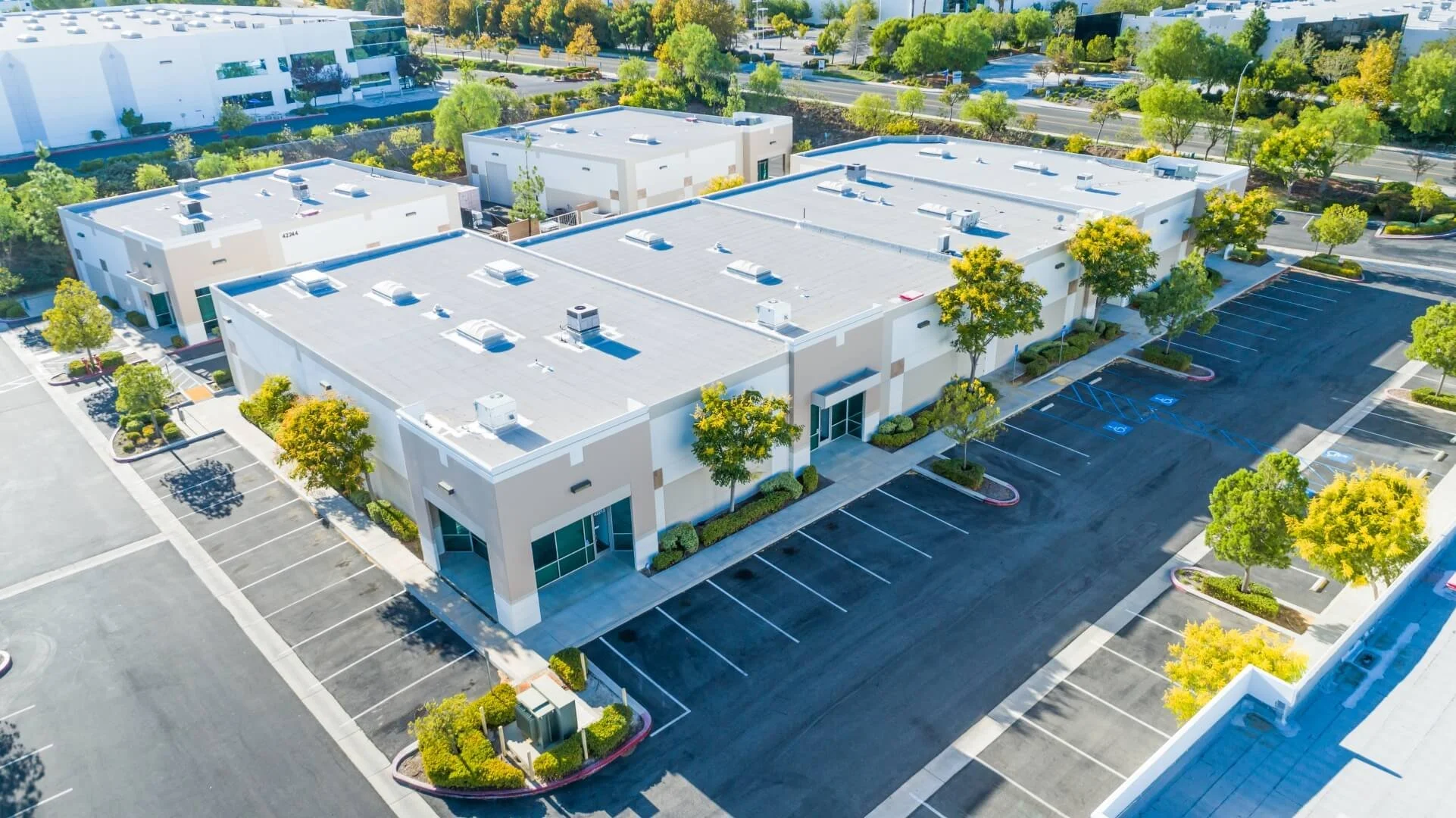
Budgeting the Roof
Most commercial roofs are funded reactively. They sit unbudgeted until they leak, at which point they become an emergency capital request competing against everything else the building needs that quarter. The roof then gets the cheapest patch that stops the complaint, the underlying condition keeps degrading, and the cycle repeats until a replacement that could have been planned becomes a replacement that cannot be deferred. The owners who escape this pattern do one unglamorous thing differently: they put the roof in the operating budget as a recurring, forecasted line, the same way they treat HVAC service or parking-lot maintenance.
The Cost of Treating the Roof as a Surprise
Deferred roof maintenance does not hold steady; it compounds. A seam that needs resealing this year becomes a wet insulation panel next year and a section of saturated deck the year after. Each stage costs several times the last, and the curve is steep enough that the difference between proactive and reactive ownership across a roof's life is routinely measured in multiples, not percentages. The reactive owner also forfeits the one lever that matters most in capital planning: timing. An emergency replacement happens on the failure's schedule, often in the worst weather, with no room to competitively bid or to align the spend with a favorable year. A planned replacement happens on the owner's schedule, with the leverage that comes from not being cornered.
There is a second, quieter cost. A roof that leaks is no longer just a roof problem. It is wet insulation feeding a chiller bill, stained ceiling tile in a leased suite, an interrupted tenant, and in some buildings a damaged inventory or a service outage below. By the time the roof forces its way into the budget through a leak, it has usually already spent money everywhere else first. Funding it proactively is not only cheaper at the roof line; it forecloses a string of downstream costs that never show up in the roofing column at all.
Why the Roof Falls Between Two Budgets
Part of the problem is accounting habit. A roof straddles two budgets that most owners keep separate: the operating budget that funds routine upkeep and the capital budget that funds the eventual replacement. Because the replacement is large and infrequent, it tends to live only in the capital column, where it is easy to keep deferring year after year. Meanwhile the maintenance that would extend the roof's life never earns a protected operating line, so it is among the first things cut in a tight year.
The result is a roof that is neither maintained nor reserved for, which is precisely the roof that fails early and expensively. Breaking the pattern starts with naming the roof in both budgets deliberately: a protected operating line for the upkeep that buys life, and a funded reserve in the capital plan for the replacement that upkeep can postpone but never eliminate. Once both lines exist and carry real numbers, the roof stops being the thing nobody owns until it fails.
What Actually Belongs in the Budget
Putting roofing in the operating plan means separating the recurring operating expense from the eventual capital event and funding both on purpose. We help owners structure it as distinct, named lines rather than a single vague roof allowance:
- Scheduled inspections. Two condition inspections a year, typically spring and fall, plus inspections after major storms, catching small failures while they are still cheap to correct.
- Preventive maintenance. Drain and gutter clearing, seam and flashing repair, sealant renewal at penetrations, and debris removal. This is the operating expense that protects the capital asset, and it is the line most worth defending in a lean year.
- Periodic moisture surveys. An infrared scan every few years to map saturation before it reaches the deck, converting an unknown into a managed, forecastable item.
- A funded reserve. A sinking-fund contribution sized to the roof's remaining service life and replacement cost, so the eventual reroof is pre-funded rather than borrowed against in a crisis.
- Warranty administration. The small annual effort of keeping inspection records, maintenance logs, and warranty documentation in order, so coverage is defensible when a claim actually arises.
None of these lines is large on its own. Collectively they are a fraction of a single emergency replacement, and they are the difference between a roof you manage and a roof that manages you.
Sizing the Reserve Honestly
The reserve line is where most operating budgets either succeed or quietly fail. A credible figure rests on three inputs, and a reserve built on guesses about any of them tends to come up short at the worst moment:
- Current condition. An honest assessment of where the roof stands today, ideally anchored to a recent condition report and moisture survey rather than the installer's optimism.
- Realistic remaining service life. Not the warranty term, which is a coverage period and not a life expectancy, but the years the assembly is genuinely likely to perform given its system, climate, and maintenance history.
- Escalated replacement cost. The cost to replace in today's dollars, carried forward to the expected reroof year, so the contribution targets the number you will actually face rather than the one you face now.
A reserve study that pulls these three together turns a frightening lump-sum future expense into a manageable annual contribution, and it gives the figure a basis you can defend in a budget review rather than a round number you can only hope is close.
The discipline is in revisiting the assumptions. A roof that begins ponding, that takes storm damage, or that shows saturation on an infrared scan has a shorter remaining life than the original study assumed, and the reserve schedule should move with it. A reserve set once and never revisited tends to be a reserve that is short exactly when the roof comes due. We treat the reserve as a living figure, re-anchored to the most recent condition data, so the funding curve tracks the roof's actual aging rather than an optimistic projection made years earlier under different conditions.
Building the Forecast Across a Hold or a Portfolio
For a single asset, the payoff of budgeting the roof is a smooth curve instead of a spike, and the ability to time the eventual replacement for a year that suits the owner. Across a portfolio, the payoff multiplies. A handful of roofs all funded reactively will eventually fail in overlapping windows, stacking emergency capital requests in the same few quarters and competing for the same crews and dollars. A portfolio whose roofs each carry a condition baseline and a funded reserve can be sequenced deliberately, smoothing capital outlay across years and letting the owner replace the worst roofs first rather than the loudest. That sequencing is only possible when the data and the reserves exist before the failures do.
Why This Changes the Conversation With Ownership and Lenders
There is a reporting benefit to this discipline that owners feel well beyond the roof itself. A building with documented inspections, a maintenance history, and a funded roof reserve presents differently to lenders, buyers, and asset managers than one whose roof condition is a question mark. The maintenance file becomes part of the asset's diligence story, the kind of evidence that shortens a buyer's questions rather than opening them. The capital forecast becomes something an asset manager can defend in a portfolio review rather than a surprise that blows the year's number.
We work with owners to build that documentation as a routine rather than a fire drill, so the roof stops being the line item nobody can answer for and becomes one of the more predictable parts of the operating plan. A roof that is budgeted is a roof that is controlled, and on a long hold, control is what keeps the cost curve flat instead of letting it spike. The goal is not to spend more on the roof. It is to spend the same money earlier, deliberately, and on the owner's schedule rather than the failure's.