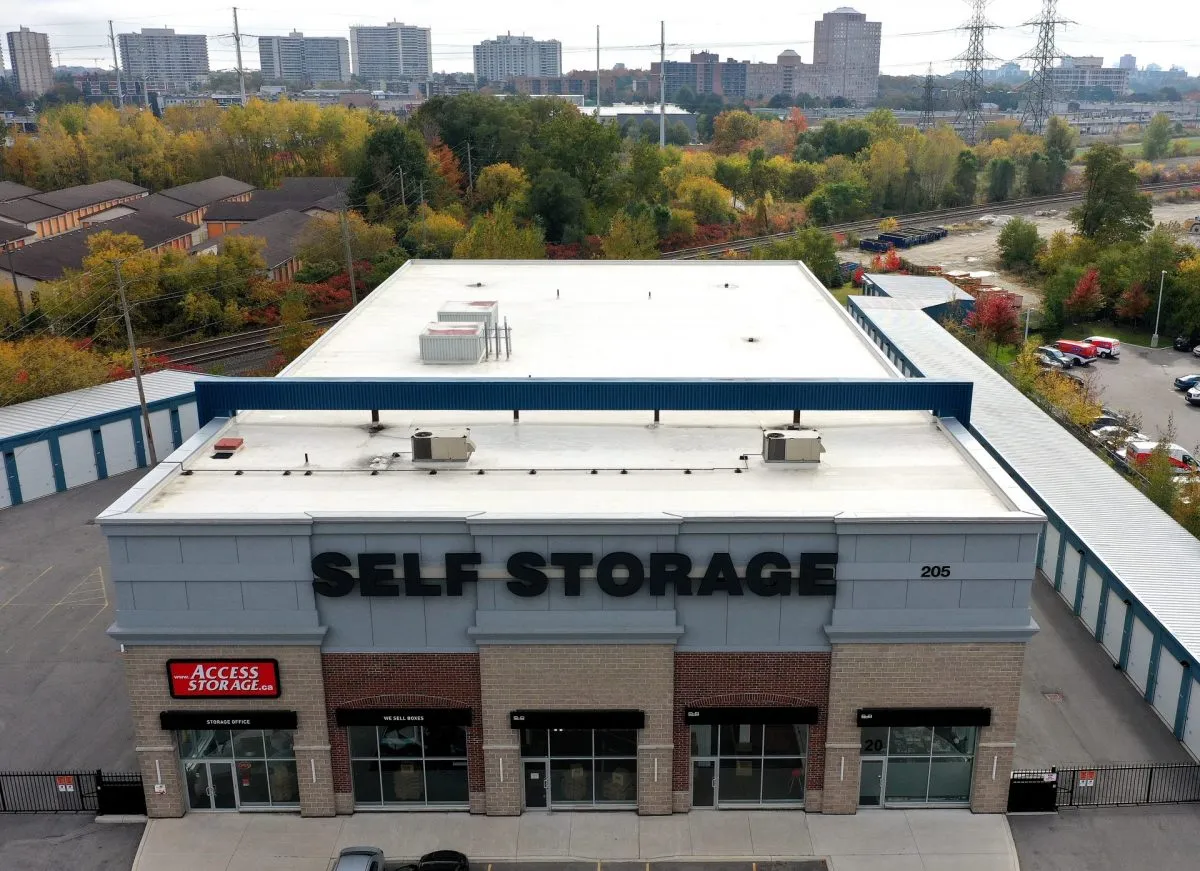
Roof Report
Most roofing spending is reactive, which is precisely why it is hard to budget. A leak arrives, a number is approved under pressure, and the reserve study absorbs a surprise it never anticipated. A ten-year roof capital plan inverts that pattern. It converts a portfolio of roofs into a forecast, so capital is timed, defensible, and aligned with the rest of the building's lifecycle rather than dictated by whichever roof fails first. We build these plans for owners managing single assets and large portfolios alike, and the discipline is the same at any scale: replace assumption with evidence, then schedule the work before the weather schedules it for you.
Begin with a credible inventory
A capital plan is only as good as the condition data underneath it. For each roof, that means knowing the membrane system, its installed age, the area in squares, the current condition, the warranty status and expiration, and any trapped moisture identified through infrared or capacitance survey. A TPO roof at year eight behaves differently from an EPDM roof at year eighteen, and a built-up roof nearing the end of its service life belongs in a different column than a modified bitumen system with a decade left.
The inventory should also capture the things that quietly govern cost when the work finally happens: the deck type, the number of existing roof layers, the presence of rooftop equipment and the penetrations that come with it, and access constraints such as height, occupancy below, or limited crane staging. These factors rarely change the diagnosis but heavily influence the price, and a plan that ignores them will be accurate about timing and wrong about dollars.
Where records are thin, the inventory is built through inspection rather than assumption. A plan resting on inferred ages and unverified areas will not survive its first audit, and a single unmeasured roof can distort the entire forecast. For an owner inheriting a portfolio with no maintenance history, establishing this baseline is not overhead; it is the foundation everything else rests on.
A useful inventory captures, at minimum, the data points that the rest of the plan will depend on, recorded consistently so roofs can be compared and ranked across the portfolio:
- Membrane system and attachment method, whether TPO, PVC, EPDM, modified bitumen, built-up, or a coated assembly.
- Installed age, measured area in squares, and the number of existing roof layers.
- Current condition and any trapped moisture confirmed by infrared or capacitance survey.
- Warranty type, term, and expiration, along with whether maintenance conditions are being met.
- Access and equipment constraints that will shape the eventual cost of work.
Forecast service life, not just age
The center of the plan is a defensible estimate of remaining service life for each roof, which is rarely the same as the warranty term. Remaining life is a function of system type, installation quality, exposure, maintenance history, and present condition. A well-maintained membrane often outlives its warranty by years, while a neglected one can fail well inside it. Treating the warranty expiration as the replacement date is a common and expensive shortcut, because it either retires sound roofs early or lets failing ones run past the point of safe service.
From those estimates, replacements distribute across the ten-year horizon. The objective is not only to predict each event but to smooth the curve, avoiding a year where three roofs come due at once and a budget cannot absorb them. We model the schedule explicitly so the timing surprises are resolved on the spreadsheet rather than in a board meeting, and so the owner can pull a near-term replacement forward or push it back deliberately to balance a given fiscal year.
Cost assumptions deserve the same rigor as the service-life estimates. A plan that prices today's replacement and carries it flat for a decade will understate the later years, so escalation has to be stated rather than assumed away. The basis of cost should also reflect the likely scope, since a tear-off to deck, a recover over the existing system, and a restoration coating are three very different numbers, and the right one depends on the roof's condition at the time the work is actually performed rather than its condition today.
It is worth being explicit about the uncertainty in these estimates rather than hiding it inside a single confident figure. Remaining service life is a range, not a point, and a plan is more credible when it says so. We often carry a roof with a likely replacement year and a plausible window around it, which lets an owner see not just when a roof is expected to come due but how much flexibility exists to move it. That honesty about uncertainty is what makes the plan trustworthy in a review, because a forecast that pretends to precision it cannot have invites exactly the skepticism it is meant to prevent.
Plan maintenance and restoration as deliberate levers
A capital plan that only schedules replacements misses the cheapest tools available. Proactive maintenance and roof restoration are how an owner controls when replacements land, and both belong in the forecast as decisions rather than afterthoughts. The plan should account for several distinct levers, each of which changes the shape of the spending curve.
- A recurring maintenance budget that protects warranties and slows degradation across the entire portfolio.
- Restoration coatings or recover systems that can extend an aging but structurally sound roof by several years at a fraction of replacement cost.
- Energy considerations, where a reflective TPO, PVC, or coated surface reduces cooling load and may carry utility incentives that offset part of the capital.
- A contingency reserve for the storm damage, hail, and latent failures that no forecast fully eliminates.
- Sequencing logic that lets a near-end-of-life roof be deferred deliberately, with documentation, rather than by default.
Used well, these levers turn the replacement schedule from a fixed prediction into something the owner can actively shape year to year. A roof that scans dry and shows only surface wear may be a strong restoration candidate, buying time and spreading the eventual tear-off into a less crowded budget year. The decision to coat rather than replace is itself a capital strategy, not merely a maintenance choice, and the plan should make that option visible well before the roof forces the question.
Tie the plan to the reserve study and the transaction file
A roof capital plan does not live in isolation. For institutional owners it feeds the reserve study; for owners preparing to sell or refinance it feeds the due-diligence file; for asset managers it feeds the annual capital request. In each case the plan is most useful when it speaks the language of the document it supports, with roofs expressed as funded reserve components, as disclosed deferred maintenance, or as line items with a clear year and basis.
This integration also protects the owner during acquisitions and dispositions. A buyer's consultant will scrutinize roof age and condition, and a seller who can produce a current, evidence-based capital plan with maintenance records and warranty documentation negotiates from a far stronger position than one who can offer only a verbal assurance that the roofs are fine. The same plan that disciplines internal budgeting becomes a credibility asset at the closing table.
Build the plan to survive review
A capital plan lives or dies in the budget review, the reserve study, and the due-diligence file, so it must be traceable. Every number should connect to a documented condition, a stated service-life assumption, and a clear basis of cost. When a CFO or an asset manager asks why a roof is scheduled for year six rather than year four, the answer should already be in the plan, supported by the inspection that produced it.
We treat the plan as a living document, revisited annually against fresh inspection data and adjusted as roofs age, weather, or get restored. A plan written once and left static drifts out of date within a year or two, because the roofs keep changing even when the spreadsheet does not. Maintained properly, it stops being an estimate that ages poorly and becomes the instrument that keeps roofing capital predictable, auditable, and on the owner's terms. That is the entire point: not to forecast spending perfectly, which no one can do, but to replace surprise with a schedule the owner controls.