Energy Strategy
Across dense commercial districts, the roof is one of the largest uninterrupted surfaces a building presents to the sky, and its color and composition quietly shape both the building's cooling load and the temperature of the neighborhood around it. The urban heat island effect describes the well-documented tendency of built-up areas to run warmer than surrounding rural land, and dark, heat-absorbing roofs are a meaningful contributor. For building owners, the question is rarely whether cool roofing helps in the abstract; it is whether a reflective or vegetated system pays back on a specific roof, in a specific climate, without compromising the membrane warranty or the building's moisture performance. We help owners answer that practically rather than ideologically.
Why Roofs Drive Urban Heat
A conventional dark membrane or aggregate surface can reach surface temperatures far above the surrounding air on a clear summer afternoon. That absorbed heat radiates back into the air over the building, raises the temperature of the membrane and the insulation beneath it, and pushes additional load onto rooftop HVAC units that are already drawing air from the hottest zone of the building. Multiply that across acres of low-slope commercial roofs in a downtown core and the cumulative effect on ambient temperature, peak electricity demand, and air quality is significant.
The two material properties that govern this behavior are solar reflectance, the fraction of sunlight a surface bounces away, and thermal emittance, how readily the surface sheds absorbed heat as it radiates back to the sky. A roof that scores well on both stays dramatically cooler in full sun. These are the levers cool roofing pulls, and they are measurable, not marketing claims.
What Cool Roofing Actually Does
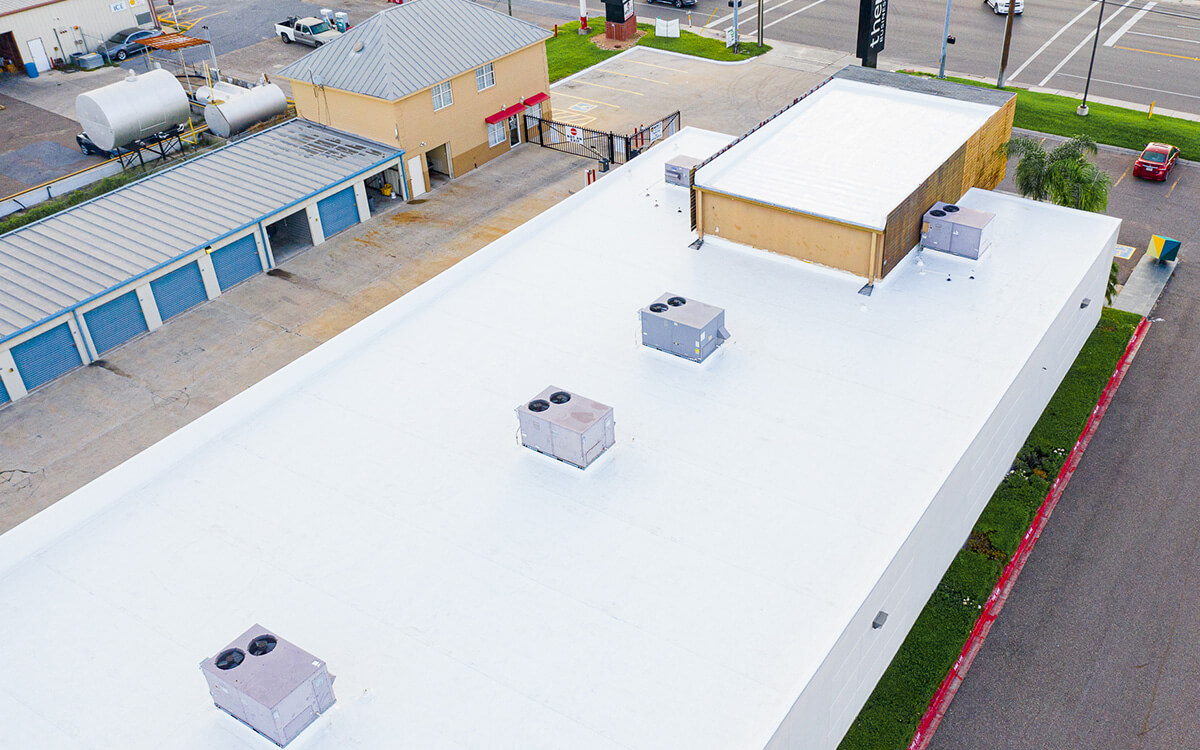
A cool roof is simply a roof engineered to reflect more sunlight and release more heat than a standard dark surface. On low-slope commercial buildings this most often means a white or light-colored single-ply membrane such as TPO or PVC, a reflective coating applied over an existing or new surface, or light-colored cap sheets and granules on modified bitumen. The result is a cooler membrane, a cooler plenum, and reduced demand on cooling equipment during peak hours.
- Lower peak cooling load, which can ease strain on aging rooftop units and reduce summer demand charges
- A cooler membrane surface, which can slow thermal cycling and may extend the practical service life of the system
- Improved occupant comfort on top floors directly beneath the roof deck
- A contribution to neighborhood-scale heat reduction when adopted across many buildings
- Eligibility in some jurisdictions for energy code compliance, utility incentives, or green building credits
Where Cool Roofs Help and Where They Don't
The value of reflectivity tracks closely with climate and cooling-dominated energy use. In hot southern and southwestern markets, a cool roof tends to deliver clear, year-round savings. In colder northern climates the picture is more nuanced: a reflective roof that saves energy in summer can give back some of that benefit as a modest winter heating penalty, since it also reflects useful solar gain on cold sunny days. For most well-insulated commercial buildings the summer savings dominate, but the balance is real and worth modeling rather than assuming.
Insulation matters more than color in many cases. A roof with adequate R-value and properly designed tapered insulation for drainage will transmit far less heat regardless of surface color, which means the marginal benefit of going reflective is smaller on a well-insulated assembly and larger on a thin, under-insulated one. We always weigh a reflective surface against, or alongside, an insulation upgrade rather than treating them as substitutes.
Green Roofs and the Broader Toolkit
Cool membranes are not the only answer to rooftop heat. Vegetated, or green, roofs replace or cover the membrane surface with growing media and plantings that shade the assembly, cool the air through evapotranspiration, and absorb stormwater that would otherwise burden municipal systems. They deliver the strongest heat-island and stormwater benefits of any rooftop option, along with amenity and biodiversity value, but they carry substantial cost, weight, and maintenance obligations.
Green roofs demand structural capacity the existing building may not have, a robust and well-detailed waterproofing layer beneath the soil, deliberate drainage design, and an ongoing landscaping commitment. They are most defensible where stormwater regulations, amenity goals, or local incentives align with the owner's plans. For many buildings a reflective membrane captures most of the heat benefit at a fraction of the complexity, which is why we treat green roofs as one option among several rather than a default.
Capital and Warranty Implications
The cleanest moment to adopt cool roofing is at planned reroof or new construction, when specifying a reflective membrane or light cap sheet adds little or no incremental cost over a dark alternative. Mid-life coatings are a separate decision: a reflective coating over a sound existing membrane can extend service life and add reflectivity, but only if the substrate is genuinely sound and the coating is compatible with it.
Two cautions guide our advice. First, any coating, ballast, or rooftop solar arrangement layered onto an existing roof can affect the manufacturer's warranty, so compatibility and written approval must be confirmed before work proceeds. Second, reflective surfaces accumulate dirt and biological growth that erode their reflectance over time, meaning the energy benefit assumes reasonable cleaning and maintenance rather than a one-time install.
How We Advise Owners
We start from the building, not the product. For each roof we look at climate zone and cooling-versus-heating balance, the existing insulation and drainage design, the structural and waterproofing implications of any vegetated option, the membrane warranty and coating compatibility, and the local code and incentive landscape. From there we model the realistic energy and capital tradeoffs and recommend the option, whether a reflective membrane at the next reroof, a compatible coating, a targeted insulation upgrade, or a green roof where it genuinely earns its place, that serves the asset's economics over its full life. Our role is owner-side and independent, so the recommendation follows the building's interest rather than any single material.