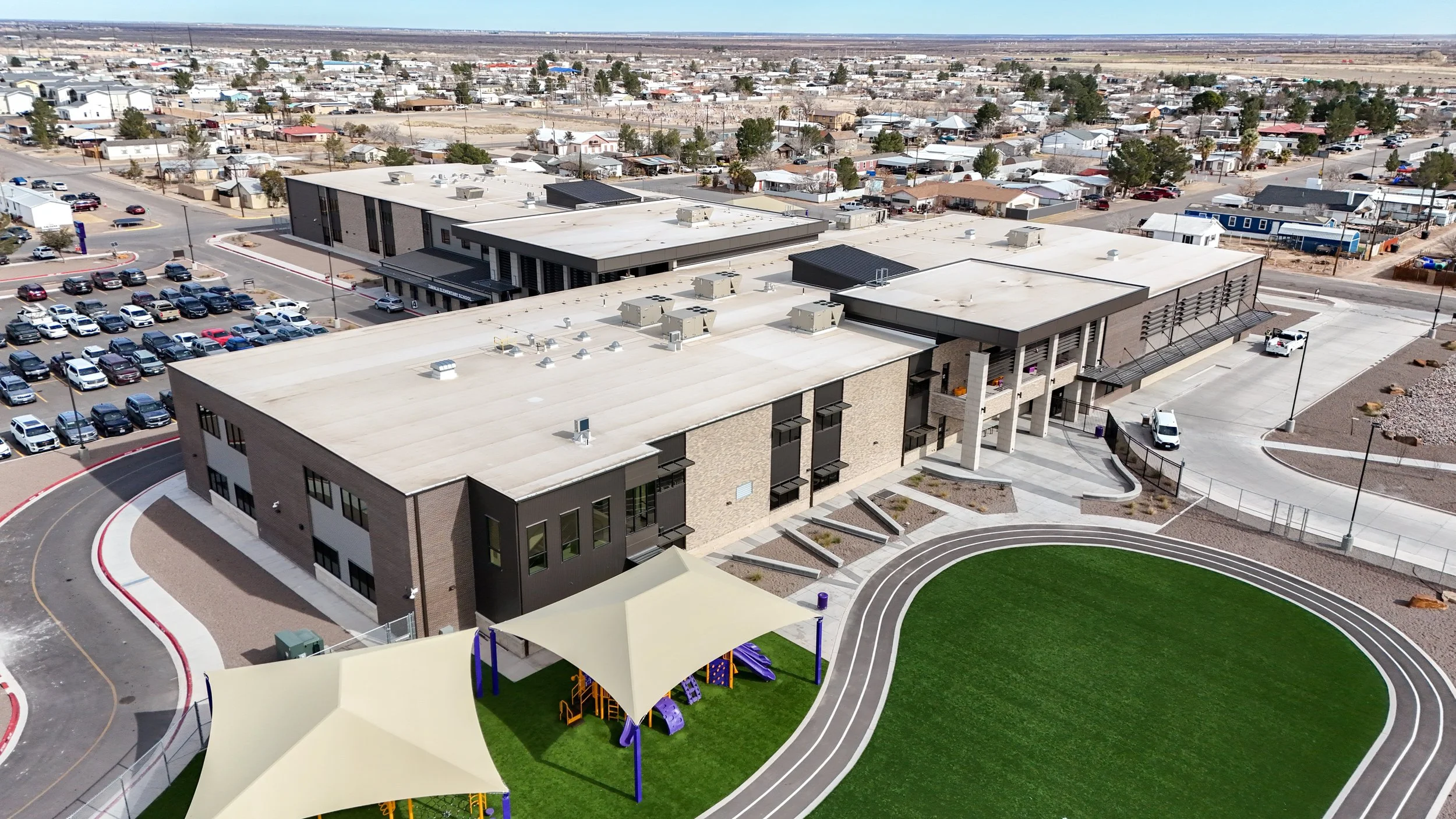
Drainage and Water
Water is the single largest threat to a low-slope commercial roof, and drainage is the system that decides whether rain leaves quickly or sits and works against the membrane. A roof that drains well sheds the vast majority of its load within hours of a storm; a roof that drains poorly holds standing water that adds structural load, accelerates membrane aging, and finds every weakness in a seam or flashing. Drainage is also frequently misunderstood as a maintenance afterthought rather than a designed system with primary and emergency paths, slope requirements, and capacity tied to local rainfall. For owners, getting drainage right is one of the highest-leverage ways to extend roof life and avoid catastrophic failure. We help owners read their drainage as a system and find the gaps before water does.
Why Standing Water Is the Enemy
Ponding water, generally defined as water that remains on the roof more than a day or two after rain stops, is corrosive to roof performance in several ways at once. It adds dead load that the structure may not have been designed to carry indefinitely, and on a flexible deck even modest ponding can deepen as the deck deflects under the weight, drawing still more water to the same spot. Standing water magnifies ultraviolet and thermal stress on the membrane, encourages biological growth and dirt accumulation, and turns any minor breach into an active leak because there is always a head of water pressing on the defect.
Most membrane manufacturers treat chronic ponding as a maintenance failure that can void warranty coverage, which makes it an owner liability as much as a physical one. A roof that ponding has aged prematurely may fail years before its rated life with no recourse against the manufacturer. The goal of drainage design is to move water off the roof fast enough that ponding never becomes the steady state.
The Components of a Drainage System
A low-slope roof drains through a deliberate combination of slope and outlets. Slope is created either by the structure itself or by tapered insulation built into crickets and saddles that channel water toward outlets and away from walls and penetrations. The outlets themselves come in a few forms, and most roofs use more than one.
- Interior roof drains, plumbed through the building, pull water from low points and are the workhorse of most large low-slope roofs.
- Scuppers, openings through the parapet, let water exit at the roof edge and are common as either a primary or a secondary path.
- Gutters and downspouts handle perimeter drainage, more typical on smaller or sloped-edge buildings.
- Tapered insulation and crickets provide the positive slope that prevents flat, dead areas where water collects between outlets.
The interaction matters as much as the parts. Drains placed at high points, crickets that do not actually reach the drains, or insufficient slope all produce ponding even when the outlets themselves are sized correctly.
Primary and Overflow Drainage
Every drainage design assumes the primary system can become blocked, which is why codes require a secondary, or overflow, path sized to carry the design storm if the primary drains clog. Overflow drains sit slightly above the roof surface or primary drain inlet, so they only engage when water backs up, and overflow scuppers do the same job through the parapet. Their visible discharge is a feature, not a defect: when an overflow scupper is running, it is a deliberate warning that the primary system is obstructed and needs attention.
Owners run into trouble when overflow paths are missing, undersized, or themselves blocked, because then a clogged primary drain has nowhere to send water and the roof becomes a shallow pond that can exceed its structural load capacity. Verifying that an emergency overflow exists, sits at the correct height, and is clear is one of the most important and most overlooked drainage checks on an existing building.
Capacity, Maintenance, and Climate
Drainage capacity is matched to local rainfall intensity, so a system adequate in one region may be undersized where storms are heavier, and intensifying rainfall patterns have left some older roofs with less margin than they were designed for. Capacity on paper means little, however, if the outlets are not maintained. Roof drains clog with leaves, debris, and roofing granules; strainers go missing; and scuppers fill with sediment. A single blocked drain can convert a well-designed roof into a ponding problem in one storm season.
- Clean drains, strainers, and scuppers on a regular schedule and always before the wet season.
- Inspect after major storms to confirm outlets cleared and no new ponding developed.
- Check that crickets and slope still direct water to the drains, since insulation can settle or compress over time.
- Confirm overflow paths remain clear and at the correct height, not blocked by later roof work or equipment.
Drainage Failures Owners Miss
Many drainage problems are introduced after the roof is built. Added rooftop equipment, solar arrays, or new penetrations can dam water or block the path to a drain. A reroof that adds insulation without re-establishing slope can flatten a roof that once drained. Patches and repairs sometimes build up material around a drain so it no longer sits at the low point. Because these changes happen incrementally, the resulting ponding is often blamed on the membrane rather than on the drainage that quietly stopped working.
The reliable way to catch these failures is to look at the roof during or right after rain, when the actual flow pattern and any ponding are visible, rather than to assume the as-designed drainage still functions. Photographs of standing water a day after a storm are some of the most useful evidence an owner can hold.
How We Advise Owners
We treat drainage as a system to be verified, not assumed. For owners, that means confirming the roof has positive slope to adequate, well-placed outlets, that a code-compliant overflow path exists and is clear, and that capacity is reasonable for the building's climate and rainfall. We look for the after-the-fact changes, the added equipment, the flattened reroof, the patched-over drain, that turn a sound design into a ponding liability, and we tie chronic ponding back to the warranty exposure it creates. Where drainage is deficient, we help you scope tapered insulation, added drains, or overflow corrections at the right point in the capital cycle rather than after a failure. Our aim is simple: get water off your roof fast, keep it off, and make sure ponding never becomes the reason your roof fails early.