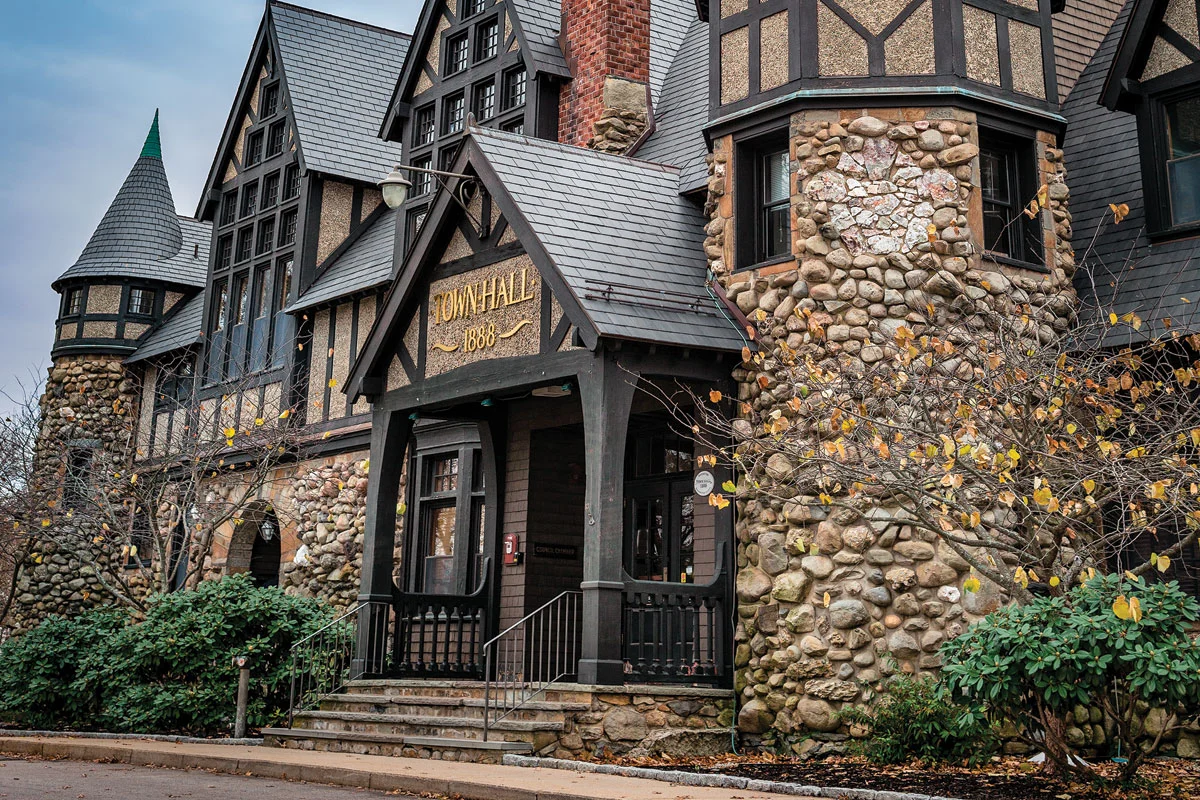
Rhode Island statewide
Rhode Island packs dense commercial property into a small coastal footprint, where salt air, persistent humidity, and Atlantic nor'easters work on roofs from Providence's older masonry buildings to the warehouse and mill conversions ringing Narragansett Bay. Wind-driven rain and coastal exposure test membrane edges, parapets, and fastening details, while the region's heavy adaptive-reuse stock often means original roof decks sitting under newer overlays. With a compact market, a single deferred roof can weigh heavily on a portfolio's numbers. We advise building owners, REITs, and asset managers across Rhode Island on coastal-grade detailing, realistic remaining service life, and capital sequencing that accounts for both salt exposure and the quirks of repurposed buildings.
Rhode Island's commercial building stock
Rhode Island is small and dense, and its commercial roof inventory reflects an economy built on healthcare, higher education, advanced manufacturing, and marine industry. Providence — the state's largest city and economic center — concentrates downtown office towers, the major hospital systems of the Lifespan and Care New England networks, and the campuses of Brown University and other institutions. The Jewelry District and downtown core have become an innovation and life-science hub, with older buildings converted to lab and office use. Warwick, powered by T. F. Green Airport, holds much of the state's modern industrial, distribution, and flex space along the Route 1 and I-95 corridor.
What sets Rhode Island apart is the age and construction of much of its stock. The state's industrial heritage left a dense inventory of nineteenth- and early twentieth-century mill buildings along the Blackstone, Woonasquatucket, and Pawtuxet rivers — in Pawtucket, Woonsocket, Central Falls, and West Warwick — many now converted to commercial, residential, and mixed use. Across these markets we commonly advise on:
- Downtown Providence office, institutional, and life-science buildings, including the Jewelry District
- Hospital and university buildings with complex, equipment-laden low-slope roofs
- Industrial, distribution, and flex space in Warwick and the I-95 corridor
- Converted mill and masonry buildings throughout the Blackstone and Pawtuxet valleys
- Coastal commercial and hospitality stock around Narragansett Bay, Newport, and the bayfront
What Rhode Island's climate does to roofs
Rhode Island faces the full New England winter, and the dominant failure driver is the freeze-thaw cycle. Meltwater enters a seam, flashing, or masonry parapet, freezes and expands, then thaws — repeating dozens of times each winter. That mechanism is especially hard on the converted mill stock, where aging built-up roofs sit behind tall masonry parapets and elaborate roof-to-wall details that are prime entry points for water. Snowfall is real but uneven across this small state: inland Providence County and the higher-elevation northwest see the heaviest accumulation, while areas adjacent to Narragansett Bay are moderated by the water and receive notably less. Owners with inland assets carry more snow-load and ice-dam exposure than those right on the bay.
The coast adds two stresses that define roofing along Narragansett Bay and in Newport. The first is Nor'easters — the powerful coastal storms that bring driving wind, heavy rain, and wind-driven snow, putting severe uplift pressure on roof perimeters, corners, and edge metal. The second is salt: the marine air corrodes fasteners, metal flashings, edge details, and rooftop equipment far faster than it does inland. For owners of coastal and hospitality properties, wind uplift resistance and corrosion of metal components are the issues we watch most closely, alongside the drainage performance that every flat roof in a wet Northeast climate depends on.
Wind, ice, and parapets
On Rhode Island roofs we pay particular attention to three things the climate punishes: edge-metal and perimeter attachment that Nor'easter winds attack, eave and drain conditions where ice dams form during inland thaws, and the parapets and copings of older masonry buildings where the bulk of water entry originates. We document these conditions with photographs and, where warranted, moisture survey, because they are the failures that drive interior damage long before a membrane field wears out.
Mill stock and institutional roofs
Two parts of Rhode Island's inventory demand a particular eye. The converted mills carry the most complicated roof geometry in the state — multiple levels, sawtooth and monitor roofs, deteriorating built-up assemblies, and tall masonry walls whose flashings and through-wall details are decades old. These buildings rarely fail in the open field; they fail at the transitions, and an assessment that only walks the membrane misses the real exposure. The hospital and university roofs in Providence carry the opposite challenge: dense rooftop equipment — air handlers, exhaust, medical and lab systems, and the screening around them — that turns a roof into a maze of curbs and penetrations. On both, and on the rooftop solar now appearing across commercial buildings, we check how equipment is supported and flashed and whether work performed around it has preserved or voided the membrane warranty.
Condition reporting for owners and asset managers
For owners holding several Rhode Island assets, the recurring obstacle is inconsistent information. A downtown Providence office building, a Warwick distribution facility, and a converted Pawtucket mill arrive with different ages, warranties, and records — often with no records at all. We build a documented baseline for each roof: system type, membrane and insulation, age and remaining service life, active and latent defects, and photographs tied to specific roof areas. That baseline turns an undefined liability into a ranked, defensible portfolio picture.
The reporting is keyed to the decisions owners actually make. It supports acquisition and disposition due diligence, satisfies lender and insurer documentation requests, and feeds the annual capital budget. When a roof appears in a property-condition assessment during a transaction, we give the buyer or seller an independent read on the asset rather than an estimate anchored to a party hoping to sell the replacement.
Capital planning and warranty exposure
Roofs are among the largest deferred-capital items on any commercial building, and the freeze-thaw and coastal climate of Rhode Island makes deferral expensive. We help owners plan capital across a multi-year horizon: which roofs need replacement now, which can be extended through targeted repair or recoat, and how to sequence projects so a portfolio is not hit with several full replacements in one fiscal year. The aim is to convert reactive emergency work into planned, competitively bid projects.
Warranty exposure is where owners quietly lose value. Manufacturer warranties carry strict conditions and are routinely voided by ordinary, unmanaged events. We help owners protect those positions by:
- Confirming warranty terms, durations, and scope — material only versus labor and material
- Tracking the inspection and maintenance obligations that keep coverage enforceable
- Reviewing rooftop solar, HVAC, and other penetrations before they void coverage
- Ensuring repairs use approved methods and contractors so they do not invalidate the warranty
- Flagging roofs nearing warranty expiration so reassessment happens before coverage lapses
Managing roofs across the state
Even in a state as compact as Rhode Island, a portfolio spread from Providence to Warwick to the bay cannot be run by reacting to whichever roof leaks first after a Nor'easter. We coordinate the full cycle for the owner: routine inspection, scoping of needed work, competitive bidding among qualified contractors, and oversight through completion and closeout. Because we are tied to no manufacturer or installer, our recommendations follow the condition of the asset and the owner's hold strategy.
For Rhode Island owners that means fewer surprises, defensible budgets, protected warranties, and roofs whose service lives are extended rather than spent early. We bring the owner-side discipline that turns a portfolio of aging roofs into a managed, predictable line on the capital plan.